Best Christmas Markets in Europe 2026: Munich, Vienna, Prague, Strasbourg & More
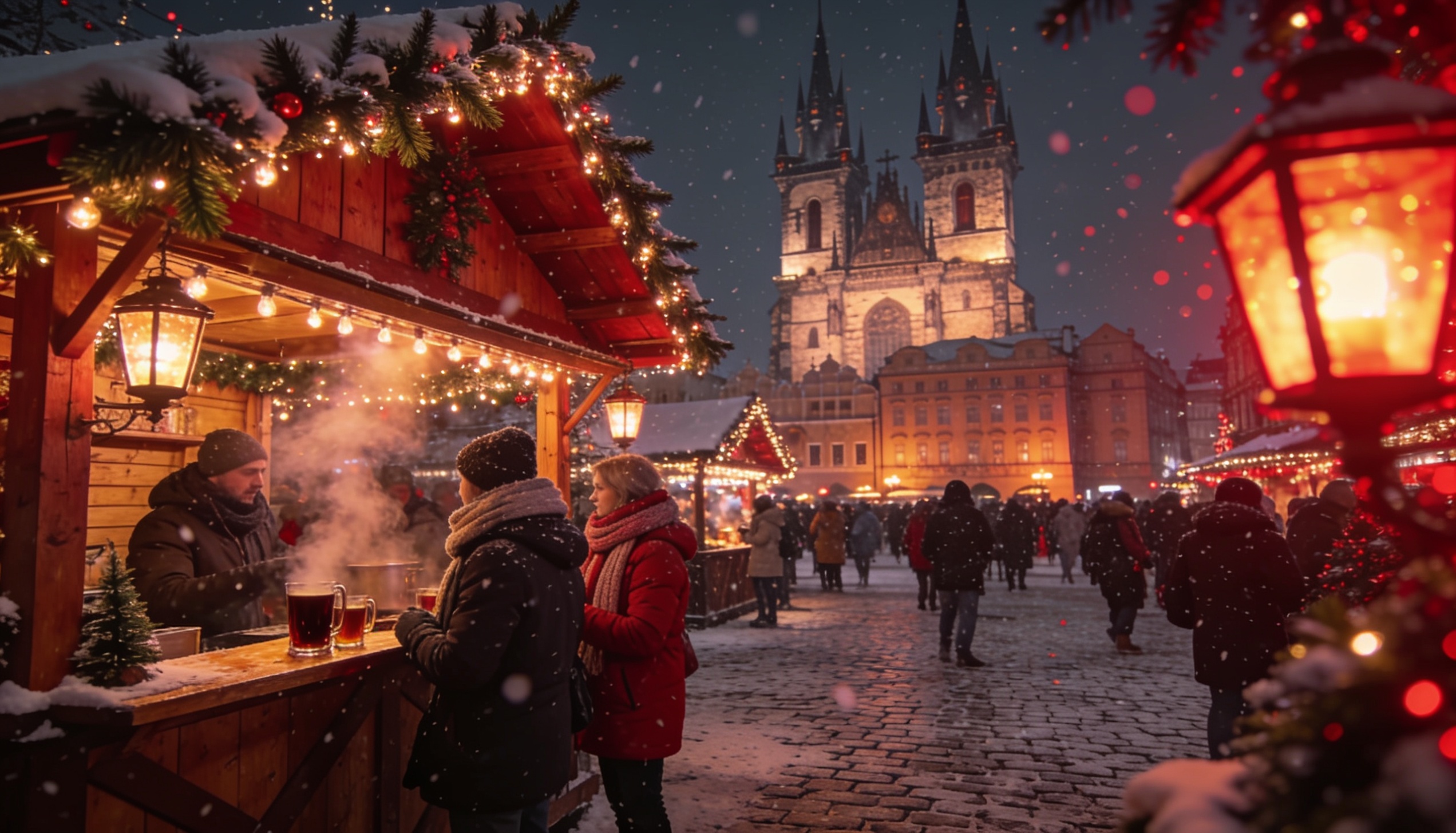
Europe's Christmas markets open in the last week of November and run through late December — and the best ones book out months in advance. Planning in September and October isn't early. The best Christmas markets in Europe in 2026 share a common quality: they exist within walking distance of historic architecture that becomes something else entirely under winter lighting and a dusting of snow. This guide covers the five cities worth planning a trip around, with dates, what to expect, and the differences that actually matter when choosing where to go.
At a Glance: 2026 Christmas Market Dates
The major European Christmas markets in 2026 run roughly from late November through December 24. Munich opens November 20; Vienna opens November 29; Prague opens November 29; Strasbourg opens late November; Nuremberg typically opens in late November. Most markets close December 24 or 26. Vienna extends into the new year.
| City | Market Name | Opens | Closes |
|---|---|---|---|
| Munich | Christkindlmarkt, Marienplatz | 20 Nov 2026 | 24 Dec 2026 |
| Vienna | Wiener Christkindlmarkt, Rathausplatz | 29 Nov 2026 | 1 Jan 2027 |
| Prague | Old Town Square Market | 29 Nov 2026 | 6 Jan 2027 |
| Strasbourg | Christkindelsmärik | Late Nov 2026 | Late Dec 2026 |
| Nuremberg | Christkindlesmarkt | Late Nov 2026 | 24 Dec 2026 |
The sweet spot for all of these markets is the first two weeks of December — late enough to feel fully festive, early enough to avoid the brutal final-weekend crowds before Christmas. Avoid December 20–23 if you can: that's when the markets are at their most congested and hotels charge peak rates.
Munich Christmas Market 2026 (Christkindlmarkt)
Munich's Christkindlmarkt at Marienplatz is one of Germany's oldest and most recognisable Christmas markets, set against the neo-Gothic backdrop of the Neues Rathaus. The market runs across the central square and into several connecting streets, with over 160 stalls selling handcrafted ornaments, Bavarian food specialties, and the essential Glühwein (mulled wine). The Glockenspiel continues its daily performances at 11:00 am and 12:00 pm throughout the market period.
Munich's market is distinguished by its strict quality standards — stall applications are vetted, and mass-produced goods are excluded. The result is a higher proportion of genuine handcraft than you'll find at many larger European markets. Look for hand-blown glass ornaments, hand-painted nutcrackers, and Lebkuchen (gingerbread) direct from Bavarian bakeries. The Christkind — a golden-haired angel figure who ceremonially opens the market from the Rathaus balcony — is a Munich tradition dating back centuries.
Munich also runs several satellite markets around the city during the same period: the Medieval Market (Mittelaltermarkt) at the Wittelsbacherplatz has a distinctly different atmosphere with fire performers and mead, while the Schwabing market and the one at the Chinesischer Turm in the English Garden are less touristy and more neighbourhood-scale.
Combining with a Munich visit: See our Things to Do in Munich 2026 guide for what to do beyond the market — palaces, museums, beer halls, and day trips all work equally well in winter.
Vienna Christmas Market 2026 (Wiener Christkindlmarkt)
Vienna's main Christmas market fills the plaza in front of the Rathaus (City Hall) with hundreds of illuminated stalls set against the neo-Gothic facade. The scale is impressive — this is one of Europe's largest Christmas markets by both stall count and visitor numbers — but what distinguishes Vienna is the quality of the surrounding architecture. The Ringstrasse boulevard at night in December, with the Opera House and Parliament buildings illuminated alongside the Rathaus, is genuinely spectacular.
The Vienna market specialises in ornate glass decorations, traditional Austrian handcraft, and a food selection that extends well beyond generic market fare: Wiener Schnitzel in a bread roll, Punsch (Vienna's spiced hot punch), roasted chestnuts, and Kaiserschmarrn (a shredded pancake dessert associated with Emperor Franz Joseph). Vienna also runs excellent satellite markets at Schönbrunn Palace, Belvedere, and in the Spittelberg neighbourhood — the last of these being the most local-feeling and least touristy.
Vienna's market runs until January 1, making it one of the few that extends past Christmas Eve. This makes it a genuinely viable destination for the post-Christmas week that many travellers find otherwise difficult to fill.
Prague Christmas Market 2026
Prague's Old Town Square market is one of Europe's most photogenic — a cluster of wooden chalets beneath the Gothic spires of the Church of Our Lady before Týn and in front of the 15th-century Astronomical Clock (Orloj). The clocktower's hourly performance draws crowds throughout December, and the combination of medieval architecture, cobblestones, and market lights makes for the kind of scene that photographs without effort.
Prague's market is known for handcrafted ornaments, Bohemian crystal and glassware, hand-carved wooden toys, and local food specialties: svařák (Czech mulled wine), trdelník (a spiral pastry grilled over charcoal), roast pork, and hot mead. A second major market operates at Wenceslas Square, with a more commercial atmosphere but also more space. Prague's market runs into early January, which is unusual for Central European markets and makes it a practical destination for travellers visiting after Christmas.
Practical note: Prague is one of the more affordable Christmas market destinations in Europe for accommodation and food costs outside the market stalls themselves. It's often significantly cheaper than Vienna or Munich for a comparable stay.
Strasbourg Christmas Market 2026 (Christkindelsmärik)
Strasbourg's Christkindelsmärik is the oldest Christmas market in France, tracing its origins to 1570 — making it one of the oldest in Europe. The market spreads across multiple squares in the historic Grande Île, a UNESCO World Heritage Site, with the centrepiece around the Gothic Strasbourg Cathedral. The cathedral's astronomical clock, the illuminated stork decorations on half-timbered buildings, and the warm glow of the hundreds of chalets along the Rue du Maréchal Foch and Place Kléber create a distinctly Alsatian atmosphere — a blend of French and German traditions.
The Alsatian specialties on offer reflect this hybrid culture: bredele cookies, Kougelhopf cake, foie gras, Alsatian wines alongside mulled wine, and tarte flambée (flammekueche) — a thin-crust Alsatian dish that has nothing to do with Christmas but is impossible to walk past without trying.
Strasbourg is well-connected by high-speed TGV train from Paris (under 2 hours) and from Frankfurt and Basel. The city's walkable scale means the market is everywhere — distributed across the entire historic centre rather than concentrated in one square.
Nuremberg Christmas Market 2026 (Christkindlesmarkt)
Nuremberg's Christkindlesmarkt is Germany's most visited Christmas market by attendance — over two million visitors each year come to the Hauptmarkt square in the city's medieval old town. Like Munich, Nuremberg's market maintains strict stall regulations: only traditional handcraft and local food are permitted. The result is a genuine craft market rather than a gift fair, with Nuremberg's specialty items including hand-painted glass ornaments, gingerbread (Lebkuchen), gold-foil angels (Rauschgoldengel), and plum-head figures (Zwetschgenmännle).
Nuremberg is easily reached from Munich by ICE train in around an hour, making a market day trip entirely practical if you're based in either city. The combination of both markets in a single winter trip is a popular itinerary for serious Christmas market travellers.
How to Plan a Christmas Market Trip in 2026
The key decisions are: city, timing, and accommodation. On timing: the first two weeks of December give the best balance of atmosphere and manageable crowds. On accommodation: book by October at the latest for weekends during the market period — hotels in walking distance of Marienplatz (Munich), Rathausplatz (Vienna), and the Hauptmarkt (Nuremberg) fill extremely fast. Prague and Strasbourg have slightly more availability but the principle is the same.
For a multi-city itinerary, the Munich–Vienna–Prague circuit by train is one of Europe's classic winter routes — all three cities are connected by direct overnight or high-speed day trains, and all three market districts are walkable from their respective train stations. Strasbourg works well as an add-on from Paris or as part of a Rhine Valley journey.
Connectivity across borders: If you're visiting multiple countries on a Christmas market trip, a European regional eSIM covers Germany, Austria, Czech Republic, and France under one plan — no SIM swapping required. Compare options at roamprice.com.
Frequently Asked Questions
When do European Christmas markets open in 2026?
Most major European Christmas markets open in the final week of November 2026. Munich opens November 20; Vienna and Prague open November 29; Strasbourg and Nuremberg open in late November. Most run until December 24, with Vienna and Prague extending into early January 2027.
Which is the best Christmas market in Europe in 2026?
It depends on what you're looking for. Munich and Nuremberg offer the most traditional Bavarian craft markets with strict quality standards. Vienna is the most architecturally spectacular setting. Prague is the most photogenic and one of the most affordable. Strasbourg has the oldest market heritage and the most distinctive Alsatian atmosphere. All five are genuinely excellent.
What is the best time to visit European Christmas markets?
The first two weeks of December are the sweet spot — the markets are fully open, the atmosphere is at its best, and crowds are manageable. Avoid December 20–23, when markets are at peak saturation. Opening weekend in late November is excellent for atmosphere but accommodation prices are already elevated.
Do I need to book Christmas market tickets in advance?
Entry to the market grounds themselves is free at all major European markets. What you need to book in advance is accommodation — especially for weekends during the market period, which sell out months ahead. Some premium market experiences (Christkind opening ceremony in Nuremberg, for example) may require advance tickets separately.
Which European Christmas market is best for families?
Vienna and Munich both have strong family-friendly elements — Ferris wheels, merry-go-rounds, children's craft workshops, and dedicated family areas within the market grounds. Prague's market is also very family-friendly. Strasbourg's market is more atmospheric than activity-focused, and better suited to adult visitors.
Do I need a travel eSIM for a European Christmas market trip?
If you're visiting multiple countries — Germany, Austria, Czech Republic, France — a European regional eSIM covers all of them under one plan, avoiding roaming charges across borders. Country-specific eSIMs work well for single-destination trips. Compare current options at roamprice.com.
Planning a European Christmas market trip?
Compare travel eSIM plans for Germany, Austria, Czech Republic, France, and more — all in one place.