Edinburgh Fringe Festival 2026: Complete Visitor's Guide
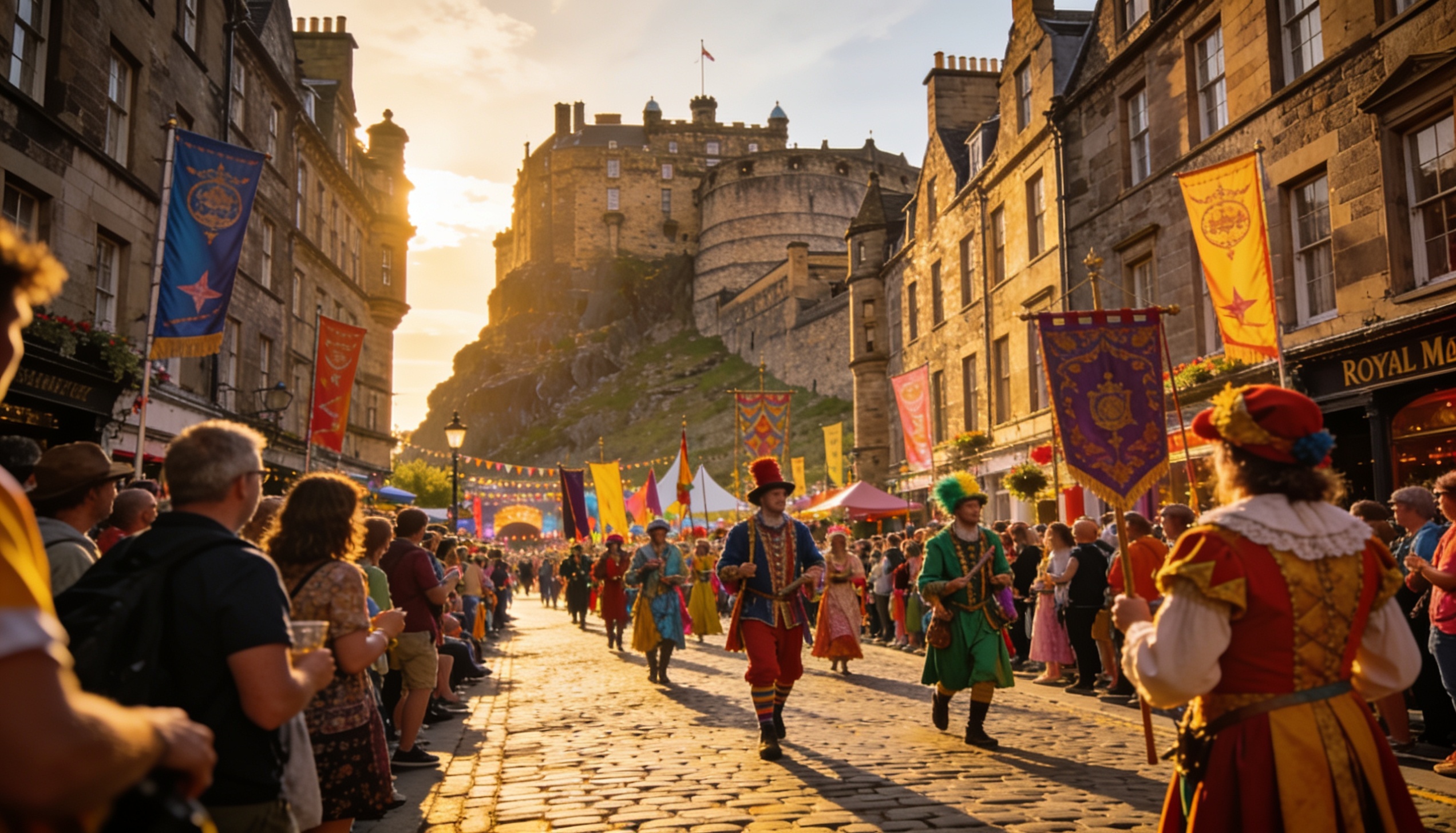
The Edinburgh Festival Fringe is the largest arts festival on the planet — no qualifier needed, no hedging. Every August, over 3,600 shows take over every available stage, pub back room, church hall, and outdoor space across a city that was not designed for this volume of people, and somehow makes it work. The Edinburgh Fringe Festival 2026 runs from 7 to 31 August, with a preview period from 3 August. If you're coming, here's what you need to know before you book anything.
What Is the Edinburgh Fringe Festival?
The Edinburgh Festival Fringe is the world's largest arts festival, held annually in Edinburgh, Scotland throughout August. In 2026 it runs from 7–31 August, with previews from 3 August. Over 3,600 shows across theatre, comedy, dance, circus, spoken word, music, and cabaret fill hundreds of venues across the city. Many shows are free; others require ticketed entry via edfringe.com.
The Fringe began in 1947 when eight companies arrived uninvited at Edinburgh's newly established International Festival and performed on the fringes of it — hence the name. It has never really had a central organiser or curatorial hand: any performer can register a show, any venue can participate. This is why the programme spans everything from experimental one-person theatre in a broom cupboard to major comedy names in 900-seat venues, sometimes on the same street within fifty metres of each other.
The Royal Mile — Edinburgh's historic main street running from the Castle down to Holyrood Palace — becomes a continuous free outdoor performance during August. Street performers, acrobats, musicians, and costumed cast members handing out flyers fill every inch of pavement. It is loud, joyful, occasionally overwhelming, and genuinely unlike anywhere else on earth during that month.
Edinburgh Fringe 2026 Dates and Timeline
Understanding the festival's rhythm matters for planning — not all weeks of the Fringe are the same.
Preview period: 3–6 August
Many shows run preview performances before the official festival start. These are typically at a discount and play to smaller audiences. For first-timers, previews are a genuine opportunity: you see the show for less, and performers are often still tightening the material — which creates a livelier, more participatory atmosphere than a polished mid-run performance.
First week: 7–13 August
The full programme opens. This is one of the easier weeks for tickets — popular shows haven't sold out yet, accommodation is marginally more available, and the Royal Mile is busy but navigable. A good time for visitors who want to see a lot without the full August crush.
Middle two weeks: 14–27 August
Peak Fringe. The city is at maximum capacity. Hotel rooms become scarce and expensive. The Royal Mile is impenetrable from late morning through evening. Tickets for breakout hits sell out daily. This is also when the energy is highest and when word-of-mouth has created the must-see list for the year. If you're coming for the full experience, this is when Edinburgh is most itself.
Final week: 28–31 August
Awards buzz and critical coverage drive demand for shows that have built a reputation over the month. Some productions sell out entirely for their remaining performances. This is also when performers begin heading home, and the city starts to exhale. The final Sunday is notably quieter than any other weekend of August.
How to Get Edinburgh Fringe Tickets 2026
The official booking platform is edfringe.com, which lists the full programme and handles ticketing for the majority of shows. The site is searchable by genre, venue, date, performer name, and price range. Tickets are delivered as e-tickets with a QR code; no physical collection is required.
Beyond the official site, there are two things worth knowing:
Free Fringe and Laughing Horse: A significant portion of Fringe shows are entirely free — no booking required, just turn up. The Free Fringe and Laughing Horse networks organise hundreds of performances in pub venues across the city. Shows run on a "pay what you want" model, with a collection bucket at the end. Many of the Fringe's most memorable discoveries happen in these rooms.
The Half Price Hut: Located on the Mound Precinct, this booth sells discounted same-day tickets for selected shows throughout the festival. If you're flexible about what you see and when, this is an excellent way to fill the gaps in your schedule. It opens each morning and sells out of popular options quickly.
Booking tip: For shows you specifically want to see — named comedians, critically acclaimed productions, sold-out-likely performances — book early via edfringe.com. For everything else, stay flexible and browse the Half Price Hut or Free Fringe listings on the day.
How to Navigate the Fringe as a First-Timer
The Fringe programme runs to thousands of entries. Without a strategy, decision paralysis sets in fast — a common first-timer experience is spending an hour reading listings and ending up at a show chosen semi-randomly that turns out to be excellent, or not. Both are valid Fringe outcomes.
A few approaches that work:
- Pick a genre anchor. If you love comedy, focus there. If you want experimental theatre, focus there. Trying to sample everything across five genres in three days produces a scattered experience. A concentrated programme within one or two genres lets you compare, follow up on recommendations, and develop a sense of the year's themes.
- Build in spontaneity. Leave at least one slot per day unbooked. Some of the best Fringe experiences come from following a flyer handed to you on the Royal Mile, or from a recommendation passed along by someone at the previous show. Over-scheduling closes off these encounters.
- Read reviews from day three onwards. The Scotsman, The Guardian, The List Edinburgh, and Broadway Baby all publish Fringe reviews daily from the first week. By day three, there's usually a critical consensus forming around the year's standout shows. These reviews are a reliable filter.
- Smaller venues, earlier in the run. The Fringe's best discoveries tend to be in 50–150 seat venues, early in the festival when prices are lower and performers are hungry for their first audiences. Late in a three-week run, shows have settled — sometimes for better, sometimes for comfort.
Edinburgh Beyond the Fringe: What to Do in the City
Edinburgh in August is emphatically a Fringe city — but not exclusively. The city's own attractions are substantial, and building them into your schedule gives rhythm to an otherwise show-intensive visit.
The Royal Mile and Old Town
Edinburgh's historic backbone runs from the Castle at the top to the Palace of Holyroodhouse at the bottom. The closes — narrow medieval alleyways cutting off the main street into hidden courtyards — are where the Old Town's real character lives. Advocates Close, White Horse Close, and Dunbar's Close Garden are among the most atmospheric. Early morning, before the Fringe crowds arrive, is when they're best: the cobblestones are quiet and the light is soft.
St Giles' Cathedral sits at the centre of the Royal Mile and is free to enter. The thistle chapel inside is particularly fine. The nearby Writers' Museum in Lady Stair's Close celebrates Scotland's literary history — Burns, Scott, Stevenson — and is also free. Both are worth thirty minutes each.
Edinburgh Castle
The castle sits on an extinct volcanic plug at the top of the Royal Mile and dominates the city's skyline from almost every direction. The Scottish Crown Jewels and the Stone of Destiny (returned from Westminster in 1996) are the main draws inside. Advance booking is strongly recommended during August — the queues for walk-up entry are long and the ticket desks regularly run out of same-day slots before midday.
Arthur's Seat
The ancient volcanic hill in Holyrood Park rises to 251 metres in the middle of the city, and the hike to the summit takes around 45 minutes at a comfortable pace. The views over Edinburgh, the Firth of Forth, and the surrounding countryside are considerable. The recommended route goes up via Dunsapie Loch and down via Salisbury Crags — allow two to two-and-a-half hours for the full loop. Wear proper shoes; the path is rocky and steep in sections.
The park sits directly behind the Palace of Holyroodhouse at the foot of the Royal Mile. Combining the Castle at the top, a walk down the Royal Mile, the Palace, and then Arthur's Seat makes for a full day that covers most of the Old Town's main landmarks on foot.
Greyfriars and the Grassmarket
Greyfriars Kirkyard — the old churchyard beside Greyfriars Bobby's statue — is one of Edinburgh's more atmospheric spots. The Grassmarket below it is a wide medieval square with a strong pub culture; it's also where the city's best independent record shops, book dealers, and vintage clothing stores cluster. The Victoria Street climb from the Grassmarket up into the Old Town is one of the most photographed streets in Scotland.
Practical Tips for the Edinburgh Fringe 2026
- Book accommodation early. Edinburgh's hotels, hostels, and Airbnbs fill up months before August. If you're planning to attend, accommodation should be your first booking — before shows, before transport.
- Wear comfortable, waterproof shoes. The Old Town is almost entirely on a steep cobblestone hill. August weather in Edinburgh is unpredictable — sunny mornings and afternoon rain are common in the same day. Proper footwear matters more here than almost anywhere else.
- Plan routes between shows. Edinburgh is compact but hilly. A walk that looks short on a map can take fifteen minutes if it involves climbing the Mound or navigating the closes. Build in extra time between bookings, especially if you're moving across the city.
- Don't ignore the flyerers. The Fringe's promotional culture means performers hand out flyers across the Royal Mile all day. Some of the best shows you'll see are ones you discovered from a well-pitched thirty-second conversation with a cast member. If someone seems genuinely interesting, it's worth a look.
- Stay connected. Edinburgh is well-covered, but roaming costs from non-UK carriers add up over a multi-day visit. Check your data plan before you go — a travel eSIM for the UK is worth comparing at roamprice.com.
Frequently Asked Questions
When is the Edinburgh Fringe Festival 2026?
The Edinburgh Festival Fringe 2026 runs from Friday 7 August to Monday 31 August. A preview period begins from 3 August, with many shows offering discounted tickets before the official start. The festival runs for 25 days in total, making it one of the longest annual arts events in the world.
How do you get Edinburgh Fringe tickets?
The main ticketing platform is edfringe.com, which lists the full programme and handles bookings for most shows. Tickets are delivered as e-tickets with QR codes. The Half Price Hut on the Mound Precinct sells discounted same-day tickets throughout the festival. Many shows are also completely free via the Free Fringe and Laughing Horse networks — no booking required.
What is the best time to visit the Edinburgh Fringe?
The preview period (3–6 August) offers smaller crowds and lower ticket prices. The first week (7–13 August) is the easiest for availability. The middle two weeks are the most intense and atmospheric but also the busiest. The final week (28–31 August) has award-driven demand for standout shows. There is no objectively best time — it depends on your tolerance for crowds versus your desire for peak energy.
Is Edinburgh Fringe worth it for first-timers?
Yes — most first-timers find it genuinely unlike anything else. The combination of the city itself, the Royal Mile atmosphere, and the sheer density of performances across every genre makes for a distinctive experience. The main first-timer mistake is over-scheduling. Leave gaps for spontaneous discoveries and Royal Mile wandering; these often produce the most memorable moments of the visit.
Do I need a UK SIM or eSIM for Edinburgh?
International visitors using non-UK carrier plans often face significant roaming charges during a multi-day stay. A UK travel eSIM is a cost-effective alternative — activate it before you leave home and switch to it on arrival. Compare current UK eSIM plans across providers at roamprice.com/country/uk.
What else is happening in Edinburgh in August 2026?
The Edinburgh International Festival (classical music, opera, dance, theatre) runs concurrently with the Fringe. The Edinburgh International Book Festival takes place in Charlotte Square Gardens. The Royal Edinburgh Military Tattoo — a spectacular outdoor performance on the Castle Esplanade — runs throughout August evenings. The city essentially becomes a month-long festival hub across multiple overlapping events.
Visiting the UK for the Edinburgh Fringe?
Don't overpay for mobile data. Compare travel eSIM plans for the UK at roamprice.com — free, unbiased, no sign-up needed.