La Tomatina 2026: Complete Travel Guide to Buñol, Spain
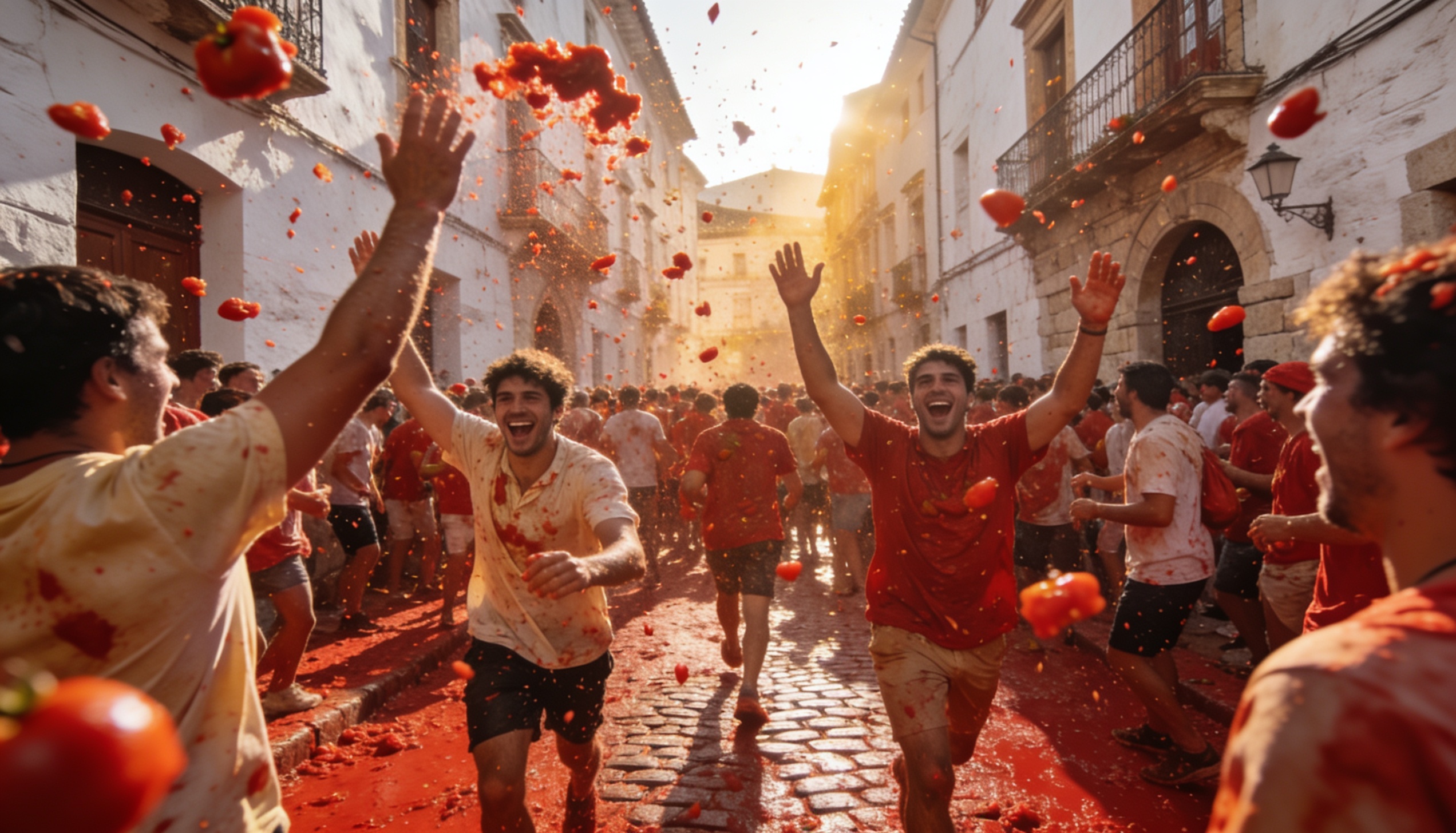
On the last Wednesday of August, a small town 40 kilometres west of Valencia turns completely red. Over 100 metric tons of tomatoes are loaded onto trucks, water cannons fire at noon, and 20,000 people spend exactly one hour pelting each other in what is arguably the world's most photogenic food fight. La Tomatina 2026 falls on Wednesday, 26 August — and if you're considering going, this guide covers everything from getting your ticket to getting back to Valencia without ruining the car seat.
What Is La Tomatina? The World's Biggest Tomato Fight
La Tomatina is an annual tomato-throwing festival held in Buñol, Spain, on the last Wednesday of August. Around 20,000 participants throw over 100 metric tons of tomatoes in a one-hour battle starting at noon in Plaza del Pueblo. Tickets are mandatory and capped — the event sells out months before the date.
La Tomatina began in 1945 — the exact origin is disputed, but the most widely told story involves a group of young people joining a street parade and a tomato vendor's cart getting caught in the chaos. Whatever started it, the town of Buñol kept the tradition going every year, and by the 1980s it had become a pilgrimage for travelers from across Europe and beyond.
Since 2013, participation has been capped at 20,000 tickets to prevent dangerous overcrowding. The fight itself lasts precisely one hour: a water cannon fires at noon to signal the start, and a second blast at 1:00 pm marks the end. At that point, the throwing stops immediately — it's a hard rule enforced by the organisers — and the town's residents begin hosing down the streets.
Ticket note: Tickets for La Tomatina 2026 go on sale from April and routinely sell out before summer. If you haven't booked yet, check the official channels at tomatina.es immediately — late availability is rare.
La Tomatina 2026 — Key Dates and What to Expect
The festival runs as part of a wider week of celebrations in Buñol known as the Fiestas de Buñol, which include music, parades, and fireworks in the days surrounding the tomato fight. La Tomatina itself is the centrepiece on the Wednesday.
The morning before the fight features the palo jabón — a greased pole with a ham at the top. Local tradition holds that the fight doesn't officially start until someone retrieves the ham. In practice, the water cannon fires at noon regardless, but the palo jabón is a crowd-pleaser worth watching.
What happens during the hour of fighting: trucks drive slowly through the main street unloading tomatoes as they go. Participants grab tomatoes from the ground or from piles alongside the route and throw them at each other. The tomatoes used are specifically chosen — slightly overripe, soft enough not to injure — and organisers ask participants to squash them before throwing rather than hurling whole ones. The streets of Plaza del Pueblo run red within minutes.
After the cannon ends the fight, Buñol's residents run garden hoses and open fire hydrants. Participants are welcome to rinse off before the bus or train back to Valencia, though you will still be significantly red for the journey home.
How to Get to Buñol from Valencia for La Tomatina
Buñol has no major airport — all international arrivals come through Valencia (VLC). From Valencia city centre, you have three practical options.
Cercanías train (recommended)
The Renfe Cercanías C-3 line runs directly from València-Nord station to Buñol in around 50–60 minutes. On the morning of La Tomatina, trains run from the very early hours to accommodate the crowds. Go as early as possible — the 7am or 8am trains fill fast, and standing room runs out. The return journey is equally packed; expect a wait after 1:30 pm as 20,000 people funnelled into a small station is a slow process.
Official coach transfers
Organised coach packages depart from several points in Valencia city — the main pickup is at Av. Pío Baroja in the Campanar district. Coaches leave from around 6:30 am with return journeys from Buñol at approximately 2:30 pm. This is the most straightforward option if you booked through one of the official tour packages, as transport is included with your entry ticket.
Private car
Driving to Buñol on the day of La Tomatina is not advised. Roads close around the town centre early in the morning, parking is extremely limited, and returning through traffic after the fight is a long wait. The train or coach is faster in practice.
Tip: Arrive in Buñol no later than 10:00 am. The streets fill quickly, and a good position in Plaza del Pueblo — closer to the action — requires being there well before noon.
What to Wear and Bring to La Tomatina 2026
This is genuinely one of the few events where what you wear matters as much as where you stand. Get it wrong and you'll be uncomfortable for hours; get it right and the whole thing is significantly more enjoyable.
- Old clothes you're happy to discard. Most participants bin their outfit after the fight — Buñol has bins specifically for this purpose. Wear white (it photographs spectacularly) or something you won't miss. Tomato juice does not wash out easily.
- Closed-toe shoes with grip. The cobblestones become extremely slippery under a layer of tomato pulp. Flip-flops are a genuine hazard — you will fall. Worn trainers or old canvas shoes work well. Secure them tightly.
- Goggles or sunglasses. Tomato juice is mildly acidic and stings the eyes, especially if a whole tomato connects from close range. Swimming goggles are popular and effective.
- Waterproof phone pouch. Your phone will not survive the fight unprotected. A waterproof pouch or dry bag is essential if you want to take photos or video during the event.
- No cameras with straps. Camera straps around the neck are a risk in a dense crowd. A phone in a secure pouch is safer than a DSLR.
- A change of clothes in a sealed bag. Leave this on the coach or at your Valencia hotel. Arriving back in Valencia in soaked, tomato-stained clothes is manageable — arriving at a restaurant for dinner that way is less so.
Valencia: What to Do Before and After La Tomatina
Most visitors base themselves in Valencia — Buñol's accommodation is minimal and books out completely for the festival period. This works in your favour: Valencia is one of Spain's most underrated cities, and the days around La Tomatina are a good excuse to explore it properly.
Before the festival
Arrive in Valencia at least the day before the fight. This gives you time to find your bearings, confirm transport logistics, and visit the city without the post-tomato exhaustion. The City of Arts and Sciences (Ciudad de las Artes y las Ciencias) is the obvious starting point — a complex of modernist buildings that includes Europe's largest aquarium, a planetarium, and an open-access garden called L'Umbracle. It's worth a half day minimum.
Valencia's Barrio del Carmen — the medieval old town — has a genuinely different character from the newer parts of the city. Narrow lanes, Roman-era walls, rooftop bars, and a strong arts scene. The Torres de Serrans (medieval gate towers) and the Llotja de la Seda silk exchange, a UNESCO World Heritage Site, are both worth a visit.
The evening before La Tomatina, Buñol runs a pre-party at Tomato Base for ticket holders — a chance to get oriented, meet other participants, and get some of the atmosphere ahead of the main event. Worth attending if your energy allows.
After the festival
The afternoon of La Tomatina is generally a write-off for sightseeing — most people return to Valencia, shower, rest, and reconvene in the evening. La Malvarrosa beach, where the Turia River meets the Mediterranean, is the local favourite for a recovery swim. It's a long, wide beach within easy reach of the city centre.
Valencia's restaurant scene leans heavily on rice dishes — paella originated here, and the city takes it seriously. The Ruzafa neighbourhood has a dense cluster of well-regarded restaurants across cuisines. An evening meal after the chaos of La Tomatina, with the festival firmly behind you, is a satisfying way to close the day.
First-Timer Tips for La Tomatina 2026
- Book your ticket as soon as possible. The 20,000-person cap is firm and enforced. Entry without a valid ticket is not permitted since the official ticketing system was introduced in 2013. Tickets are only available through official channels — be cautious of third-party resellers.
- Leave valuables at the hotel. A waterproof pouch for your phone is sufficient. Wallets, jewellery, and anything irreplaceable should stay in Valencia.
- Don't throw whole tomatoes. It's a genuine rule and a safety issue. Squeeze the tomato before throwing. A whole tomato thrown at close range can injure. Organisers and locals will call this out.
- Stay aware of the crowd. The centre of Plaza del Pueblo is intense — the crowd surges as trucks pass. If you want photos rather than full immersion, the edges and rooftops of nearby buildings give a better vantage point.
- Plan the train home in advance. Return trains fill immediately after the fight ends. Having your return ticket booked and knowing which platform to head for saves significant time in the post-fight scramble.
- Arrive early, leave on time. The hour itself passes quickly. The experience before and after — the atmosphere, the crowd, the cleanup — is part of the day. Don't rush the morning.
Frequently Asked Questions
When is La Tomatina 2026?
La Tomatina 2026 takes place on Wednesday, 26 August 2026 — the last Wednesday of August, as it is every year. The tomato fight runs from noon to 1:00 pm exactly. The broader Fiestas de Buñol surrounding it run for several days before and after.
Do you need tickets for La Tomatina?
Yes. Since 2013, participation has been capped at 20,000 and tickets are mandatory. You cannot enter the fight zone without a valid ticket. They go on sale from April and often sell out before the summer. Book through official channels at tomatina.es or an authorised tour operator to avoid reseller risk.
How do you get to Buñol from Valencia for La Tomatina?
The Renfe Cercanías C-3 train from València-Nord station takes around 50–60 minutes and runs from the early morning on the day of the festival. Official coach transfers also depart from Valencia city (Av. Pío Baroja) from 6:30 am. Both options are significantly faster than driving on the day.
What should you wear to La Tomatina?
Old white clothes you're prepared to throw away, closed-toe shoes with grip (cobblestones get very slippery), and goggles or sunglasses for eye protection. Bring a waterproof phone pouch and pack a change of clothes in a sealed bag to leave on the coach or at your hotel. Most people discard their fighting outfit before returning to Valencia.
Is La Tomatina safe?
Yes — the event is well-organised with clear rules (squeeze tomatoes before throwing, no glass, no rucksacks in the fight zone) and a defined one-hour window. The main risks are slipping on wet cobblestones and eye irritation from tomato juice. Sensible footwear and goggles address both. The crowd is dense but not typically dangerous; the edges of the fight area are always calmer than the centre.
Where should I stay for La Tomatina?
Valencia is the standard base — it's 40 kilometres from Buñol and has a wide range of accommodation across all budgets. Buñol itself has very limited places to stay, and whatever exists books out entirely. Book Valencia accommodation well in advance for the 25–27 August period, as demand is high.
Traveling to Spain for La Tomatina?
Don't overpay for mobile data. Compare travel eSIM plans for Spain at roamprice.com — free, unbiased, no sign-up needed.