Things to Do in Bali: The Essential 2026 Travel Guide
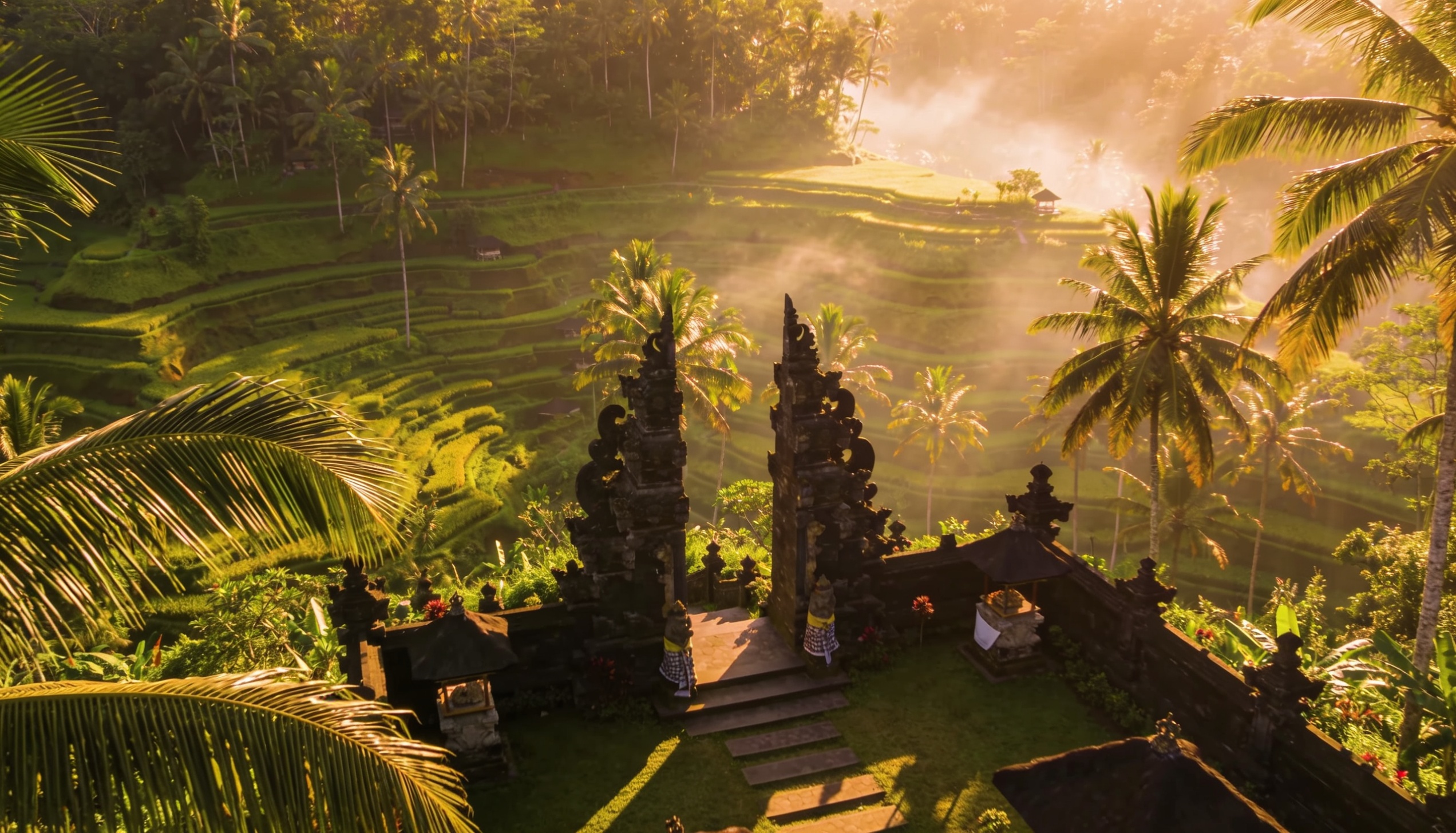
Bali is one of the most visited islands in the world, and for good reason — but the version most visitors get (beach clubs, tourist restaurants, Kuta nightlife) is only a fraction of what the island actually offers. The Bali worth spending time in is found in Ubud's rice terraces at dawn, in quiet temple ceremonies held without an audience, in the villages north of the tourist corridor where the pace is entirely different. This guide covers both — what's genuinely worth the hype and what's worth the detour.
Ubud — The Cultural Heart of Bali
Ubud is the base for most of Bali's inland experiences, and the place where the island's artistic and spiritual traditions are most accessible. The Tegalalang rice terraces, about 10km north of Ubud, are the image that appears in every Bali travel photo — stepped rice paddies dropping down a valley, framed by palm trees, photographed at sunrise when the tour groups haven't yet arrived. The terraces use a traditional Balinese cooperative irrigation system (subak) that is a UNESCO World Heritage feature. Arrive before 8am to walk the lower paths without crowds.
Ubud's Sacred Monkey Forest Sanctuary is a working temple complex inside a genuine forest that has been inhabited by long-tailed macaques for generations. The monkeys are bold and will take anything not secured — phone straps, sunglasses, water bottles. Keep bags closed and watch your pockets. The forest itself, with its ancient banyan trees and temple ruins, is beautiful and worth 90 minutes.
The Puri Lukisan Museum and the Neka Art Museum both focus on traditional and modern Balinese painting — distinct from most art traditions in using flat perspective, highly detailed scenes from Hindu epics, and vivid natural pigments. Neither is crowded and both explain the artistic tradition well enough that you leave understanding what you're looking at.
Kecak Fire Dance at Uluwatu
The Kecak dance — performed by a circle of 50 to 70 men chanting rhythmically to tell the Ramayana story — is held every evening at sunset at the clifftop Uluwatu Temple. The combination of the chanting, the fire, and the Indian Ocean backdrop at golden hour is among the most memorable cultural experiences in Southeast Asia. Arrive 30 minutes early for seats at the outer edge with the sea view. Bring a sarong (or rent one at the gate — it's required for temple entry).
The South — Seminyak, Canggu, and the Beaches
Seminyak is Bali's upscale beach strip — good restaurants, beach clubs with sun loungers and pool access, and a beach sunset that is genuinely excellent. The sunset at Seminyak and Kuta beaches faces directly west and is unhurried in a way that city sunsets never are. Potato Head Beach Club and Ku De Ta are the most established beach club names; both are worth an afternoon even if you're not a resort person.
Canggu, 15 minutes north of Seminyak, has evolved into Bali's remote-worker and surf centre — the waves at Echo Beach and Berawa are consistent year-round, and the area has better coffee shops and independent restaurants than anywhere else on the island. It's less "resort Bali" and more functional town that happens to have a surf break.
Transport note: Bali has no reliable public transport between areas. You'll need a scooter (if you're comfortable riding), a hired driver for the day, or Gojek/Grab (the local ride-hailing apps that work well in south Bali and Ubud). Taxis without meters at the airport are significantly more expensive than Grab — order from the app before you leave arrivals.
Uluwatu and the Bukit Peninsula
The Bukit Peninsula, at the southern tip of Bali, is a limestone headland with clifftop ocean views and the island's best surfing. Uluwatu itself is a famous left-hand reef break that draws serious surfers from around the world — the cliff-top warung restaurants look directly down at the break and you can watch surfers navigate it while eating nasi campur. The beach access down narrow cliff stairs leads to Padang Padang beach, one of Bali's most photographed coves.
Bingin and Balangan beaches, each down a steep path from the road, are quieter alternatives with the same clifftop setting. The walk down is easier than it looks from the top, and the beaches are significantly less crowded than Seminyak or Kuta.
North Bali — The Road Less Taken
Most visitors never make it to the north coast, which means Lovina, Singaraja, and the Munduk highlands are almost entirely free of the tourist density that defines the south. Lovina's dolphin-watching at sunrise is genuinely spectacular — traditional wooden outrigger boats head out before 6am to find spinner and bottlenose dolphins that feed in the straits, and in the right conditions you'll have them surfacing within metres of the boat. It's one of the most ethically conducted wildlife experiences in Southeast Asia because the boats don't chase the animals.
Munduk, a highland village surrounded by clove, coffee, and vanilla plantations at around 1,000m elevation, is what you come to Bali for if you want cool nights, dramatic valley views, and complete silence. The waterfall walks from Munduk village — particularly the double waterfall at Sekumpul — are among the most beautiful in Indonesia and still entirely uncrowded compared to anything in the south.
When to Visit Bali
Bali has two seasons: the dry season (April to October) and the wet season (November to March). The dry season is the obvious choice — lower humidity, consistent sunshine, surfable waves on the west-facing beaches. July and August are peak season with higher prices and more visitors. The shoulder months of April, May, June, and September are the best combination of good weather and manageable crowds.
The wet season is not necessarily a reason to avoid Bali — rainfall is typically a few hours in the afternoon rather than all-day grey, and the rice fields are at their most lush and vividly green from January to March. The north coast and highland areas see less rain than the south during the wet season. If you're travelling on a budget, wet-season accommodation rates can be significantly lower.
Nyepi — Bali's Day of Silence: Each year (usually March), Bali observes Nyepi — a Hindu New Year day of silence during which all activity stops island-wide. No travel, no lights, no internet (telecoms providers cut data). The airport closes for 24 hours. If you're visiting around March, check the exact date and plan your arrival and departure accordingly.
Frequently Asked Questions
How many days do you need in Bali?
Seven days is the standard that allows you to cover both Ubud and the southern beach areas without rushing. Ten to fourteen days lets you add the Bukit Peninsula, a day trip north, and enough evenings to start understanding the place rather than just seeing the sights. Long-stay visitors and remote workers often find that three to four weeks is when Bali starts to reveal itself properly — it's a very rewarding island the more time you give it.
Is Bali good for solo travellers?
Yes — Bali is one of the easier solo travel destinations in Southeast Asia. The infrastructure for independent travellers is well developed, accommodation at every price point is widely available, Gojek and Grab work reliably in the main areas, and the local population is consistently hospitable. The main practical challenge is transport, since there's no good public transit — renting a scooter or hiring a driver solves this. English is widely spoken in all tourist areas.
What is the best area to stay in Bali?
It depends on what you're there for. Ubud is best for culture, rice terraces, yoga, and easy access to inland Bali. Seminyak is best for beach clubs, restaurants, and nightlife. Canggu is best for surfing and a younger, more independent travel scene. Uluwatu and the Bukit are best for serious surfers and anyone who wants clifftop views and quieter beaches. Most visitors doing a week or more split between Ubud (3-4 nights) and the south (3-4 nights).
Do I need a visa for Bali (Indonesia)?
Many nationalities can enter Indonesia visa-free for 30 days, including EU citizens, UK citizens, and Australians. US citizens are eligible for a 30-day Visa on Arrival, extendable once. Nationals of some countries require a social-cultural visa obtained in advance. Check the Indonesian immigration website directly before travelling, as policy has changed in recent years. As of 2026, the Bali Tourism Levy of IDR 150,000 (paid on arrival or online beforehand) applies to international arrivals.
Heading to Bali? Compare eSIM plans for Indonesia before you fly.
Indonesia eSIM plans compared side by side — data, validity, real-time pricing. Free, no sign-up. roamprice.com →