Things to Do in Bangkok: The Essential 2026 Travel Guide
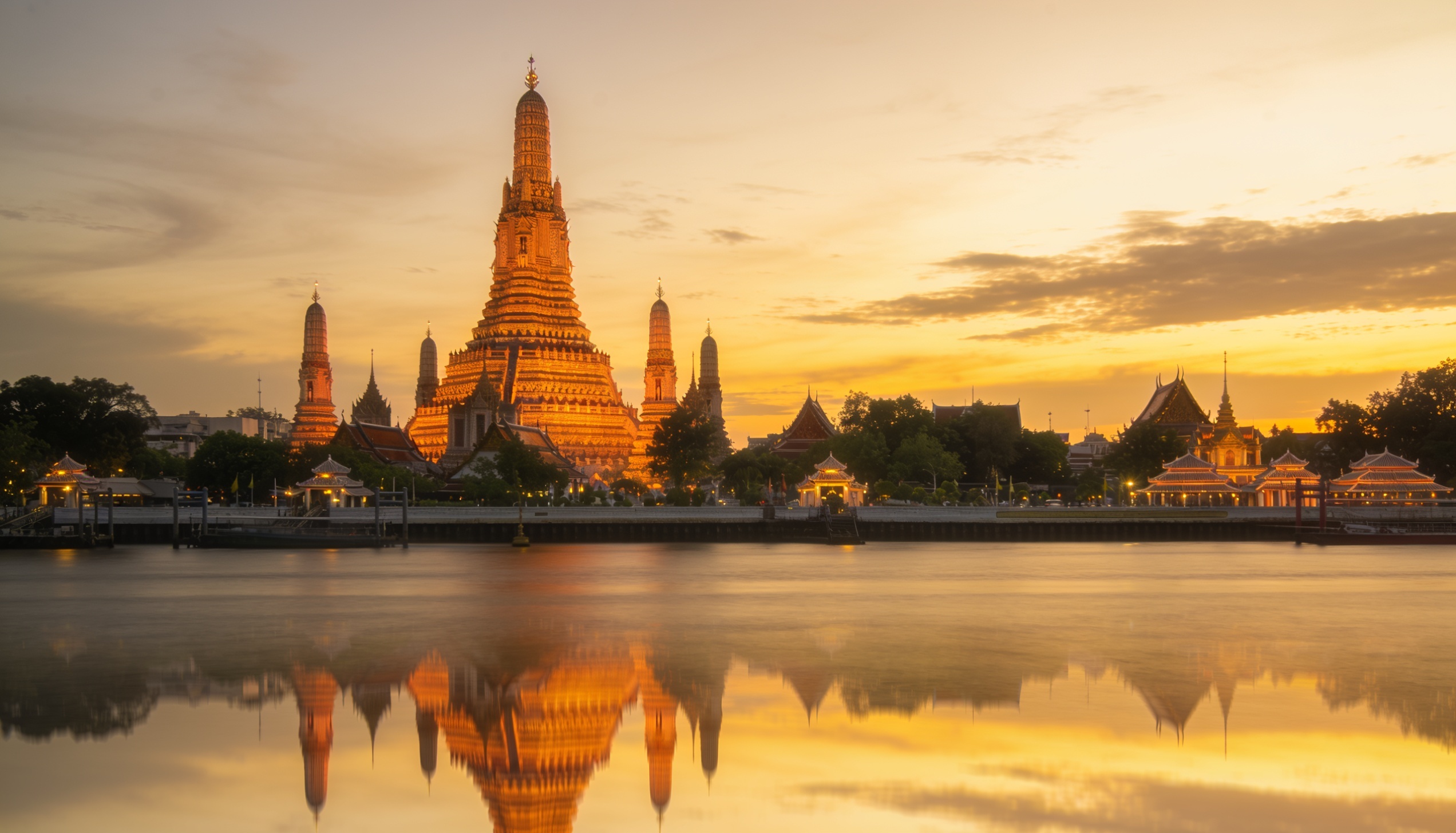
Bangkok does not ease you in. It hits you immediately — the heat, the noise, the smell of frangipani and frying garlic, the city's ceaseless forward motion. It is also, despite all that energy, one of the most rewarding cities in the world to explore slowly. The things to do in Bangkok that matter most are rarely the loudest ones: a quiet morning at Wat Pho before the crowds arrive, a plate of pad kra pao from a cart that closes by noon, a ferry ride at dusk as Wat Arun turns amber in the fading light. This guide covers where to go, what to skip, and how to make the most of one of Southeast Asia's great cities in 2026.
Temples First — Wat Pho and the Grand Palace
No first visit to Bangkok is complete without the temple circuit — but the order and timing matter more than most guides admit. Start at Wat Pho, which opens at 8:00 am and draws a fraction of the Grand Palace's crowds at that hour. The Reclining Buddha inside the Vihara is 46 metres long, gilded from head to foot, and genuinely difficult to take in all at once — the building is barely wider than the statue itself. Admission is 200 baht. Plan 45 minutes to an hour, then walk the two minutes north to the Grand Palace.
The Grand Palace complex is open daily from 8:30 am to 4:30 pm, with last entry at 3:30 pm. Avoid arriving between 10 am and 2 pm if you can — the heat and the tour groups converge at the same time. Dress code is strict: shoulders and knees must be covered, and the temple provides sarongs at the entrance for those who need them. Inside the complex, Wat Phra Kaew (the Temple of the Emerald Buddha) is the centrepiece, a deeply ornate chapel housing a jade Buddha that changes ceremonial costume three times a year. Budget two to three hours for the whole complex.
For the best view of Wat Arun (Temple of Dawn), cross the Chao Phraya by ferry from the Tha Tien pier — the crossing takes five minutes and costs 5 baht. The temple itself is climbable and worth the effort for views across the river, but the most famous image — all four prang spires glowing orange at sunset — is best photographed from the opposite bank.
Chinatown, Talat Noi, and the Waterfront
Bangkok's Chinatown district, known as Yaowarat, has been a staple of the traveller circuit for decades. What's changed recently is the area immediately south of it — Talat Noi and the stretch of Songwat Road running parallel to the river. This quarter was once a warren of old merchant warehouses and Chinese clan houses. In the last few years it has been quietly revitalised: murals have gone up on corrugated walls, independent cafes occupy renovated shophouses, and the lanes that used to be empty by 9 pm are now worth exploring into the evening. It is Bangkok's most photogenic neighbourhood right now, and most package tour itineraries miss it entirely.
Yaowarat Road itself is best experienced after dark, when the gold jewellery shops close and the seafood carts take over the pavement. The stretch between the Odeon Circle roundabout and the Ratchawong intersection fills up around 6 pm and stays busy until midnight. Grab a table at one of the open-air restaurants and order whatever is cooking — the roast duck rice, the steamed crab claws, the century egg congee. The food on Yaowarat is not the cheapest in Bangkok, but the density of quality per block is hard to match anywhere in the city.
Bangkok Beyond the Temples
Chatuchak Weekend Market opens on Saturdays and Sundays and is, by most measures, the largest weekend market in the world — around 15,000 stalls across 35 sections covering everything from live plants and vintage denim to antiques and Thai ceramics. Arrive early (it opens at 9 am) before the heat makes browsing difficult. The market is serviced by BTS Mo Chit and MRT Chatuchak Park stations. Budget three to four hours, and eat at the market itself — the food section on the north end is excellent.
For something quieter, the Ari neighbourhood (BTS Ari station) is Bangkok's answer to a relaxed urban village. The main streets are lined with independent cafes, small galleries, and wine bars that feel nothing like the rest of the city. It is a good place to spend a morning or an afternoon when the major sites start to feel exhausting. No single highlight compels a visit, but the general atmosphere makes it one of the best neighbourhoods in Bangkok for drifting without purpose.
Further afield, Bang Krachao — sometimes called the Green Lung — is a large loop of land created by a bend in the Chao Phraya, a 15-minute ferry from Klong Toei pier. Almost entirely car-free and forested, it is a strikingly strange contrast to the city visible just across the water. Rent a bicycle near the ferry landing and follow the paths into the interior. On weekends a small market sets up near Sri Nakhon Khuean Khan Park. Plan half a day.
Bangkok Street Food — Where the City Actually Eats
Bangkok street food is not a trend. It is infrastructure. The city operates on it at all hours, and the best eating is almost never inside a building. A few streets worth knowing:
Banthat Thong Road, near Chula university, is one of Bangkok's most reliable late-night food streets — busy from around 6 pm and with carts still running past midnight. The mix is varied: boat noodles, grilled pork skewers, mango sticky rice, and a rotating cast of specials that change nightly. It is a 10-minute walk from BTS Sala Daeng.
Khlong Toei Market, open from early morning, is the wholesale fresh market that supplies much of Bangkok's restaurant scene. It is not particularly visitor-friendly and the layout is genuinely confusing, but the produce section is a spectacle — mountains of galangal, makrut lime leaves, fresh turmeric, and varieties of chilli most supermarkets have never seen. Go early, between 6 am and 8 am.
For the Maeklong Railway Market experience — where a daily train passes so close to the stalls that vendors have to fold their awnings back — take the commuter rail from Wongwian Yai station to Maeklong, a journey of about 90 minutes each way. The market operates every day, and the train runs multiple times. It is a day trip from Bangkok, not a neighbourhood, but worth it once.
Bangkok Travel Tips for 2026
The BTS Skytrain covers most tourist areas efficiently and is by far the fastest way to move around the city during peak hours. The Silom Line and Sukhumvit Line connect at Siam station. For areas not served by BTS — including the old town temples and Chinatown — the Chao Phraya Express Boat and MRT Blue Line fill most gaps. Metered taxis are inexpensive and honest; always insist on the meter.
Bangkok's heat and humidity are serious. From March to May temperatures regularly exceed 38°C; the rainy season runs roughly June through October, bringing heavy afternoon downpours that clear quickly. Pack light, loose clothing, carry water constantly, and plan strenuous outdoor activities for the morning. The temple dress code applies everywhere — a lightweight scarf serves both as a cover-up and as sun protection.
Cash is still widely used and sometimes essential. ATMs are plentiful, but most charge a foreign transaction fee of 220 baht per withdrawal — bring enough to limit trips. Most convenience stores, large markets, and mid-range restaurants accept cards, but street carts and smaller vendors are cash only.
Frequently Asked Questions
How many days do you need in Bangkok?
Three to four days covers the main temples, Chinatown, at least one market, and a handful of meals worth remembering. Five or six days gives you room to slow down, explore neighbourhoods like Ari or Talat Noi, and take a day trip to Maeklong or Bang Krachao. A single day is possible but genuinely rushed.
What is the best time of year to visit Bangkok?
November through February is the coolest and driest period — peak season for good reason. March to May is the hottest, with temperatures frequently above 38°C. The rainy season (June–October) brings heavy daily downpours but also fewer tourists and lower hotel rates. Rain rarely lasts more than an hour or two, so it is manageable with planning.
Is Bangkok safe for first-time travellers?
Bangkok is generally very safe for tourists. The most common risks are petty theft in busy market areas, traffic (footpaths are inconsistent and motorbike taxis treat red lights as suggestions), and occasional scams near major tourist sites — the most common being tuk-tuk drivers who insist a temple is "closed today" and offer to take you somewhere else instead. A simple rule: if someone approaches you on the street with unsolicited advice about where to go, decline.
What is the best neighbourhood to stay in Bangkok?
Sukhumvit (especially around BTS Asok or Phrom Phong) offers excellent transport links, a wide range of restaurants, and easy access to both the commercial and historical parts of the city. Silom is better for those who want to be closer to the Chao Phraya and Chinatown. The old town area near Khao San Road is convenient for temples but noisier and further from BTS.
Do I need a visa to visit Bangkok?
Thailand offers visa-on-arrival or visa-free entry for citizens of more than 60 countries, with stays typically permitted for 30 to 60 days depending on nationality. Rules change periodically — check your country's current status on the Thai Ministry of Foreign Affairs website before travelling. Passport validity of at least six months is usually required.
Heading to Thailand? Compare eSIM plans before you fly.
Find the best travel eSIM plan for Bangkok and beyond — compare providers by data, validity, and price per GB. Free, unbiased, no sign-up required.
Compare Thailand eSIM plans →