Things to Do in Barcelona: The Essential 2026 Travel Guide
Barcelona runs at its own pace — late lunches, later dinners, neighbourhoods that don't wake up until midnight. It has some of the most extraordinary architecture in Europe, beaches within walking distance of the old town, and a food culture that ranges from Michelin-starred restaurants to bar snacks that embarrass everything you've eaten elsewhere. This guide cuts through the obvious and goes for what's actually worth your time in 2026.
Sagrada Família — Book Ahead, Go Early
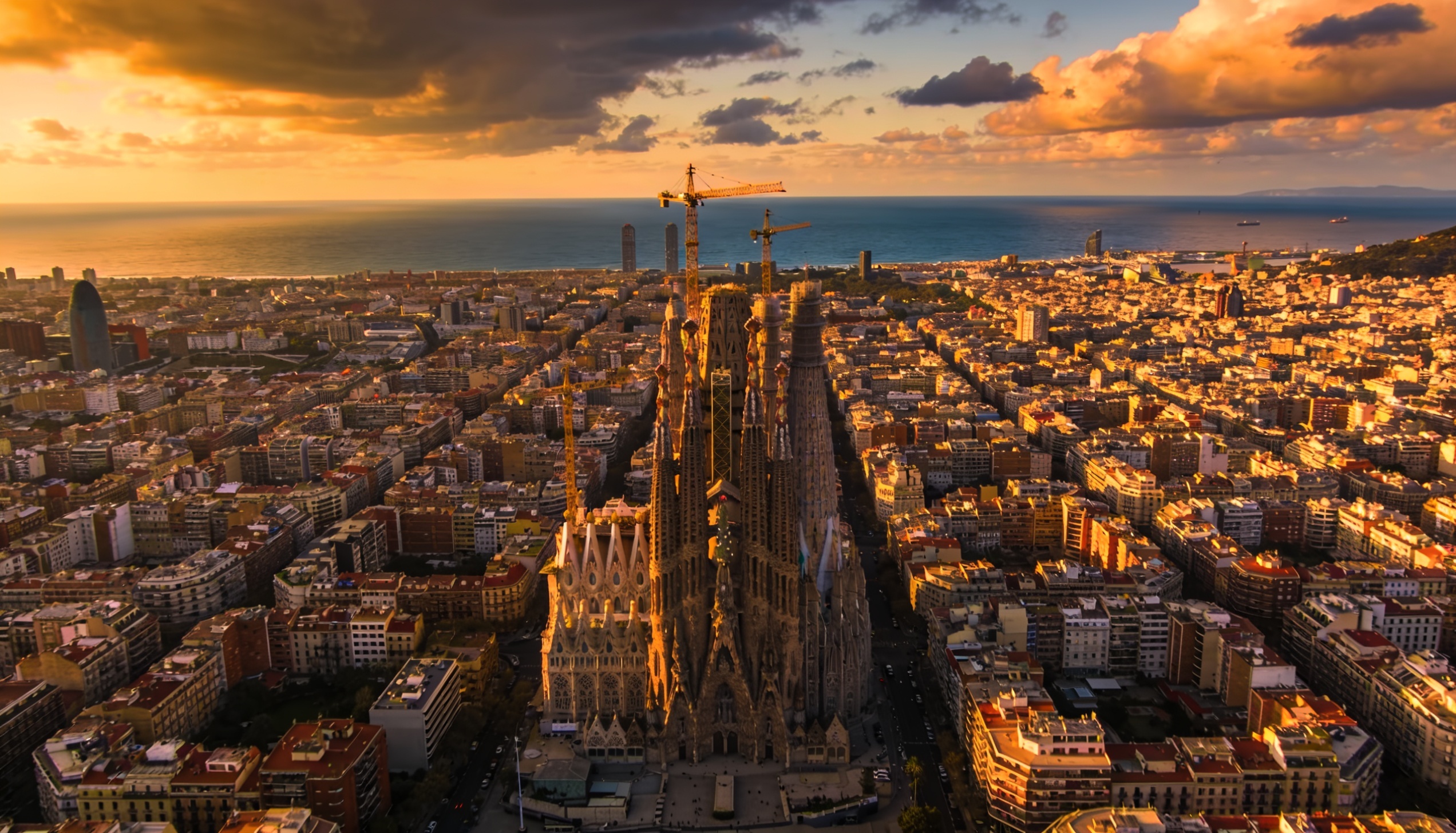
Antoni Gaudí's unfinished basilica has been under construction since 1882 and is scheduled for completion in the mid-2030s. In 2026, the experience of visiting is still defined by scaffolding on some towers — but the interior, completed in recent decades, is one of the most astonishing spaces in Europe. The light through the coloured glass windows shifts throughout the day, turning the stone columns of the nave into something that feels more underwater than architectural.
Go as soon as it opens at 9am. The booking site sells timed entry slots — you must book in advance, especially between May and October, or you won't get in. The tower access tickets are worth adding for the view over the Eixample grid towards the sea. Spend at least 90 minutes inside rather than rushing through.
The Nativity facade (east side, original Gaudí work) and the Passion facade (west side, designed by Josep Subirachs after Gaudí's death) are deliberately different in style — comparing them gives you a sense of how the building's meaning has evolved across different artistic eras. The museum below the basilica explains the construction history through Gaudí's scale models.
Park Güell — The Terrace, Not the Crowds
Park Güell was designed by Gaudí as a private garden city that never fully developed — the terraced mosaic esplanade, the gingerbread gatehouses, and the columned market hall are what remain of his vision. The Monumental Zone (the ticketed section with the famous dragon staircase and mosaic bench terrace) has timed entry to manage crowds. Book your entry window before you visit.
What many guides miss: the majority of the park is free and open all day. The winding stone viaducts in the lower section, built from rough rock to blend into the hillside, are among Gaudí's most interesting structural experiments — and most visitors walk straight past them. The views from the park's upper reaches over Barcelona to the sea are better than from the ticketed terrace, and you have them almost to yourself.
Gaudí triangle: Sagrada Família, Park Güell, and Casa Batlló (on Passeig de Gràcia) represent Gaudí's three most celebrated works in the city. All three require advance booking. If your time is limited, prioritise Sagrada Família — the interior is the most singular experience — then Park Güell for the park atmosphere, and save Casa Batlló for a rainy afternoon.
The Gothic Quarter and El Born
The Gothic Quarter (Barri Gòtic) is Barcelona's oldest neighbourhood — Roman walls, a medieval cathedral, and narrow streets so old they have no right angles. The Barcelona Cathedral is free to enter in the morning and afternoon (small charge at midday), and the cloister behind it houses a flock of geese — a tradition maintained for over 500 years. The Temple of Augustus, with four Roman columns preserved inside a Gothic courtyard at Carrer del Paradís 10, is one of the most quietly impressive ancient sites in Spain and almost entirely overlooked.
El Born, immediately east of the Gothic Quarter, is the neighbourhood that repays wandering. The Basílica de Santa Maria del Mar — built in the 14th century by the city's merchants in just 54 years — is architecturally purer and more emotionally immediate than the cathedral. The Born Cultural Centre occupies a 19th-century iron market building and preserves the archaeological remains of a neighbourhood destroyed in 1714, open for viewing through the glass floor.
Gracia and the Neighbourhood Barcelona
Gracia is the neighbourhood that reminds you Barcelona is a city where people actually live. Once an independent municipality before being absorbed into the city, it has its own distinct identity — quieter streets, local markets, plaças (squares) where families eat outside in the evenings, and almost no tourist infrastructure. Plaça del Sol and Plaça de la Vila de Gracia are the two central squares; arrive around 7pm on a weekday and you'll find locals doing what Catalans do in warm weather — sitting outside with a drink doing very little in a very purposeful way.
The Mercat de l'Abaceria on Travessera de Gràcia is one of Barcelona's older neighbourhood markets, less visited than La Boqueria and more authentically stocked with local produce, cheese stalls, and a bar serving breakfast to market workers since the early morning. The flea market section on weekends is worth an hour of browsing.
What to Eat in Barcelona
Pa amb tomàquet is the Catalan baseline — bread rubbed with tomato and olive oil, served as an accompaniment to nearly everything. More interesting than it sounds, and inexplicably hard to replicate at home. Patatas bravas in Barcelona are typically served with two sauces (spicy and aioli) rather than one; the best are crispy enough to hold the sauce without going limp. Bar Tomás in Sarrià is the canonical version.
Croquetas vary wildly in quality across the city; the best are made with jamón ibérico and have a liquid centre. Vermut (vermouth) is a Barcelona ritual — served at midday before lunch, with olives and anchovies, in old-school bars where the bottles have been sitting on the shelf since 1970. Bar Calders in Sant Antoni and Bar Marsella in the Gothic Quarter are both good for this.
La Boqueria on Las Ramblas is worth visiting in the morning for the experience, but most of the stalls facing the main entrance are tourist-oriented and overpriced. Walk to the back of the market for the stalls selling to locals — the quality and prices are both better.
When to Visit Barcelona
May, June, and September are the best months. The weather is warm (20–28°C), the sea is swimmable, and the crowds are manageable. July and August are the peak tourist months — extremely hot (often above 35°C), heavily crowded at major sights, and the city slows noticeably as locals leave on their own summer holidays. October and November are underrated — the light turns golden, accommodation prices drop, and the city returns to something closer to its normal pace. La Merce festival in late September is one of the city's best annual events, with free outdoor concerts, human towers (castellers), and fire runs through the old town streets.
Frequently Asked Questions
How many days do you need in Barcelona?
Three days is the minimum for covering the main Gaudí sights, the Gothic Quarter, El Born, and Barceloneta beach. Five days gives you time for Gracia, a day trip to Montserrat or the Dalí Theatre-Museum in Figueres, and enough evenings to understand the city's late dining rhythm. A week starts to feel like you're actually living there briefly rather than visiting.
Do I need to book Sagrada Família in advance?
Yes, always. The Sagrada Família sells timed entry tickets that sell out days or weeks in advance, especially from May to October. Book directly on the official website (sagradafamilia.org). Tickets purchased through third-party sites are often significantly more expensive for the same entry. Tower access and audio guides are separate add-ons — both recommended.
Is Barcelona safe for tourists?
Barcelona is a safe city in terms of violent crime, but pickpocketing is a significant issue in the tourist-heavy areas: Las Ramblas, La Boqueria, the Gothic Quarter, and on the metro. Use a front-pocket or cross-body bag, keep your phone in your pocket in crowded areas, and be particularly careful at restaurant tables where bags can be slipped away quickly. These precautions are straightforward and the risk becomes very manageable.
What is Barcelona best known for?
Gaudí's architecture — primarily Sagrada Família, Park Güell, Casa Batlló, and Casa Milà (La Pedrera) — is the global shorthand for Barcelona. Beyond that: FC Barcelona and Camp Nou (now in a major renovation, with a temporary stadium in use in 2026), the food culture of Catalan cuisine, the beach-and-city combination, and a nightlife culture that genuinely begins after midnight.
Heading to Barcelona? Compare eSIM plans for Spain before you fly.
Spain eSIM plans compared side by side — data, validity, real-time pricing. Free, no sign-up. roamprice.com →