Things to Do in Munich 2026: The Complete Travel Guide
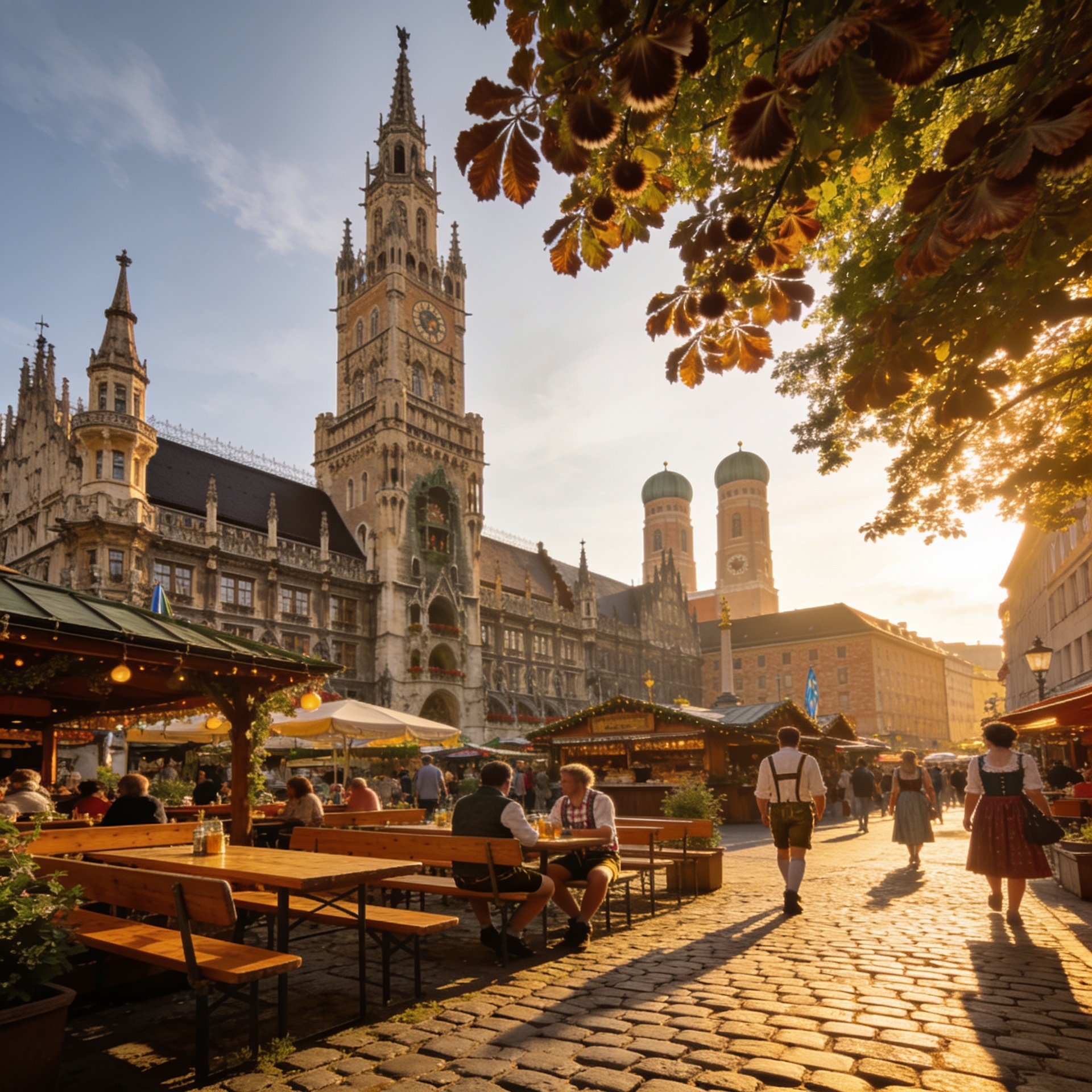
Munich is one of Europe's most livable and most visited cities — and the two things are directly connected. The Bavarian capital has world-class museums, more green space than almost any other major European city, a beer culture that predates most countries, and a transport network efficient enough to make day trips to Alpine castles entirely practical. The best things to do in Munich span everything from the ornate Baroque rooms of the Residenz to a river surfing wave in the middle of a public park. Here's what's actually worth your time in 2026.
The City Centre: Marienplatz and the Altstadt
Marienplatz is Munich's central square and the heart of the Altstadt (old town). The Neues Rathaus (New Town Hall) on the north side of the square features the famous Glockenspiel, a 43-bell carillon that performs daily at 11:00 am and 12:00 pm (and at 5:00 pm from March to October). The show lasts about 12 minutes and depicts two stories from Munich's medieval history.
Marienplatz is the natural starting point for any Munich visit — it's where the U-Bahn and S-Bahn lines converge, and the surrounding pedestrian zone is packed with Munich's most iconic architecture. The Neues Rathaus (1867–1909) dominates the north side of the square with its neo-Gothic facade; the older Altes Rathaus (Old Town Hall) from the 15th century sits at the square's east end. Climbing the Neues Rathaus tower gives one of the best views in the city over the rooftops toward the Alps on clear days.
A ten-minute walk from Marienplatz brings you to the Viktualienmarkt, Munich's permanent outdoor food market — open every weekday and Saturday morning. It's been in operation since 1807 and is one of the best places in the city to try Bavarian specialties: white sausages (Weisswurst), pretzels, radishes, and local cheeses. The market has a beer garden at its centre that operates year-round.
Also within walking distance: the Frauenkirche, Munich's twin-towered cathedral dating from the 1470s, whose distinctive onion domes define the city's silhouette. Entry to the cathedral is free.
The English Garden (Englischer Garten)
The English Garden is one of the world's largest urban parks — at 910 hectares, it's significantly bigger than Central Park in New York. It stretches north from the edge of the Altstadt through the heart of Munich and into the northern suburbs, and it functions as the city's de facto public living room across every season.
The park's most internationally known feature is the Eisbach river surfing wave at its southern tip, near the Haus der Kunst museum. Year-round, a queue of surfers waits for a turn on the standing wave created by a channel beneath the road. It's entirely free to watch and one of Munich's most unexpected spectacles.
Inside the park: the Chinesischer Turm (Chinese Tower) beer garden is one of Munich's most beloved, with seating for several thousand under the chestnut trees. It's open from spring through autumn and is at its best on warm September afternoons. Further north, the Kleinhesseloher See lake offers rowing boat rentals in summer. The Japanisches Teehaus (Japanese Tea House) on a small island in the park hosts traditional tea ceremonies on selected weekends.
Munich's Palaces: The Residenz and Nymphenburg
The Munich Residenz
The Residenz was the seat of the Wittelsbach dynasty — Bavaria's ruling family for over 700 years — from 1508 until the end of the monarchy in 1918. The complex in the city centre comprises ten courtyards and 130 rooms of state apartments, treasure chambers, and the Cuvilliés Theatre, one of the most beautiful Rococo interiors in Europe. The Residenz Museum and Treasury are open to visitors daily. Allow at least two hours to cover the main highlights.
Nymphenburg Palace
Schloss Nymphenburg sits 6 kilometres west of the city centre and is reached easily by tram (line 17 from Hauptbahnhof). The summer palace of the Wittelsbach rulers features a 600-metre-wide Baroque facade, formal gardens, and a park extending nearly a kilometre behind it. The palace complex includes several smaller pavilions — the Amalienburg hunting lodge is one of the finest examples of Rococo architecture in Germany. The palace park is free to enter; the palace interiors require a ticket.
Museums Worth Half a Day
Deutsches Museum
The Deutsches Museum on Museum Island (Museumsinsel) in the Isar river is the world's largest science and technology museum, with over 73,000 exhibits spanning everything from mining to space travel. It's genuinely excellent — not just impressive in scale, but well-curated. The aviation hall, the original full-size submarine U1, and the planetarium are consistent highlights. A half-day here is enough for most visitors; dedicated museum-goers could spend a full day.
BMW Museum and BMW Welt
The BMW Museum and adjacent BMW Welt (BMW World) sit in the northern Olympic district, a short U-Bahn ride from the centre. The museum traces the company's history from 1916 to the present with a collection of vehicles, engines, and design objects in a striking bowl-shaped building. BMW Welt next door is a free-entry showroom and event space with a futuristic glass-and-steel architecture that's worth seeing in its own right. Car enthusiast or not, the combination makes for an absorbing visit.
The Pinakotheken
Munich's art museum district, Kunstareal, groups three major galleries within walking distance of each other in Maxvorstadt. The Alte Pinakothek covers European painting from the 14th to 18th centuries (one of the world's great old masters collections). The Neue Pinakothek focuses on 18th and 19th century art. The Pinakothek der Moderne houses modern and contemporary art, architecture, design, and graphic art under one roof. On Sundays, the entrance fee for all three drops significantly — one of Munich's best-value cultural days.
Oktoberfest 2026 and Munich's Beer Culture
If you're visiting in late September or early October, Oktoberfest 2026 runs 19 September to 4 October at the Theresienwiese — less than 2 kilometres from Marienplatz, a short walk from the Theresienwiese U-Bahn station. Entry to the festival grounds is free. See our complete Oktoberfest 2026 Travel Guide for everything you need: tent reservations, what to wear, and first-timer tips.
Year-round, Munich's beer culture extends well beyond the Wiesn. The Hofbräuhaus on Platzl is the city's most famous beer hall, dating to 1589 and seating over 1,000 people under its vaulted ceilings. It's a tourist destination by definition at this point, but it remains genuinely atmospheric — especially in the evening with the brass band playing. For a more local experience, the beer gardens of the English Garden or the Augustiner-Keller on Arnulfstrasse (one of Munich's oldest continuously operating beer gardens) are where Munich residents actually spend summer evenings.
Day Trips from Munich
Neuschwanstein Castle
~2 hours by regional train to Füssen, then bus or taxi. The fairy-tale castle that inspired Disney. Book timed entry tickets well in advance for 2026.
Salzburg, Austria
~1h 45min by direct train. Mozart's birthplace, Mirabell Gardens, the Hohensalzburg fortress, and the old town as a UNESCO World Heritage Site.
Dachau Memorial
~40 min by S-Bahn (S2) + bus. The first Nazi concentration camp, now a carefully preserved memorial and museum. A sobering but important visit.
Berchtesgaden & Eagle's Nest
~2.5 hours by train and bus. Alpine scenery, Königssee lake, and the historic Eagle's Nest mountain retreat (open May–October).
Practical Tips for Munich in 2026
Munich's public transit — the MVV network of U-Bahn, S-Bahn, tram, and bus — is one of the best in Europe. A day ticket covers all zones within the city and is the most cost-effective option if you're making multiple journeys. The city is also very walkable and bikeable; several bike-sharing schemes operate across the city centre.
The best time to visit Munich beyond Oktoberfest is late spring (May–June), when the beer gardens open and the Alpine views from the city are sharpest, and early autumn (September, outside Oktoberfest week). Summer is warm and pleasant; winter is cold but the Christmas markets (late November through December) draw their own crowds.
Connectivity tip: Munich has strong 5G coverage in the city centre, Olympic district, and airport. Rural day trips to Neuschwanstein or Berchtesgaden have more variable coverage — a plan on the Deutsche Telekom network gives the best rural reliability. Compare current plans at roamprice.com/country/germany.
Frequently Asked Questions
How many days do you need in Munich?
Three full days is enough to cover the main highlights: Marienplatz and the Altstadt, the English Garden, one or two major museums, Nymphenburg Palace, and a beer hall evening. Four to five days allows day trips to Neuschwanstein or Salzburg. If you're visiting during Oktoberfest, plan for at least one dedicated festival day on top of your city sightseeing.
Is Munich expensive to visit?
Munich is one of Germany's pricier cities for accommodation and dining, but many of the best experiences are free or low-cost: the English Garden, Marienplatz, the Viktualienmarkt, Nymphenburg Palace grounds, and Oktoberfest itself (entry is free). Museum tickets are reasonable, and public transit is excellent value.
What is the best neighbourhood to stay in Munich?
Staying in or near the Altstadt (Marienplatz area) or in Schwabing (near the English Garden) puts you within walking distance of most attractions. Maxvorstadt — the museum district — is a good base for art and culture focused visitors. For Oktoberfest, anywhere within a 30-minute U-Bahn ride of Theresienwiese station works well.
What language is spoken in Munich?
German, specifically Bavarian German (which differs slightly from standard Hochdeutsch). In tourist areas, hotels, and restaurants, English is widely spoken. You'll encounter Bavarian dialect more frequently in traditional beer halls and local neighbourhoods.
How do I get from Munich Airport to the city centre?
The S1 and S8 S-Bahn lines run from Munich Airport to the city centre (Hauptbahnhof/Marienplatz) every 10 minutes and take approximately 40–45 minutes. This is by far the most convenient option. From Hauptbahnhof you can connect to any U-Bahn or S-Bahn line in the city network.
Do I need a travel eSIM for Germany?
If you're visiting from outside the EU, you'll almost certainly pay roaming fees on your home plan — or need to manage data carefully. A Germany travel eSIM activates in minutes and gives you a local data connection from the moment you land. Compare current plans at roamprice.com/country/germany.
Visiting Munich? Don't pay roaming fees.
Compare travel eSIM plans for Germany — find the right plan for your trip length before you land.
Compare eSIM plans for Germany →