Things to Do in Singapore: The Essential 2026 Travel Guide
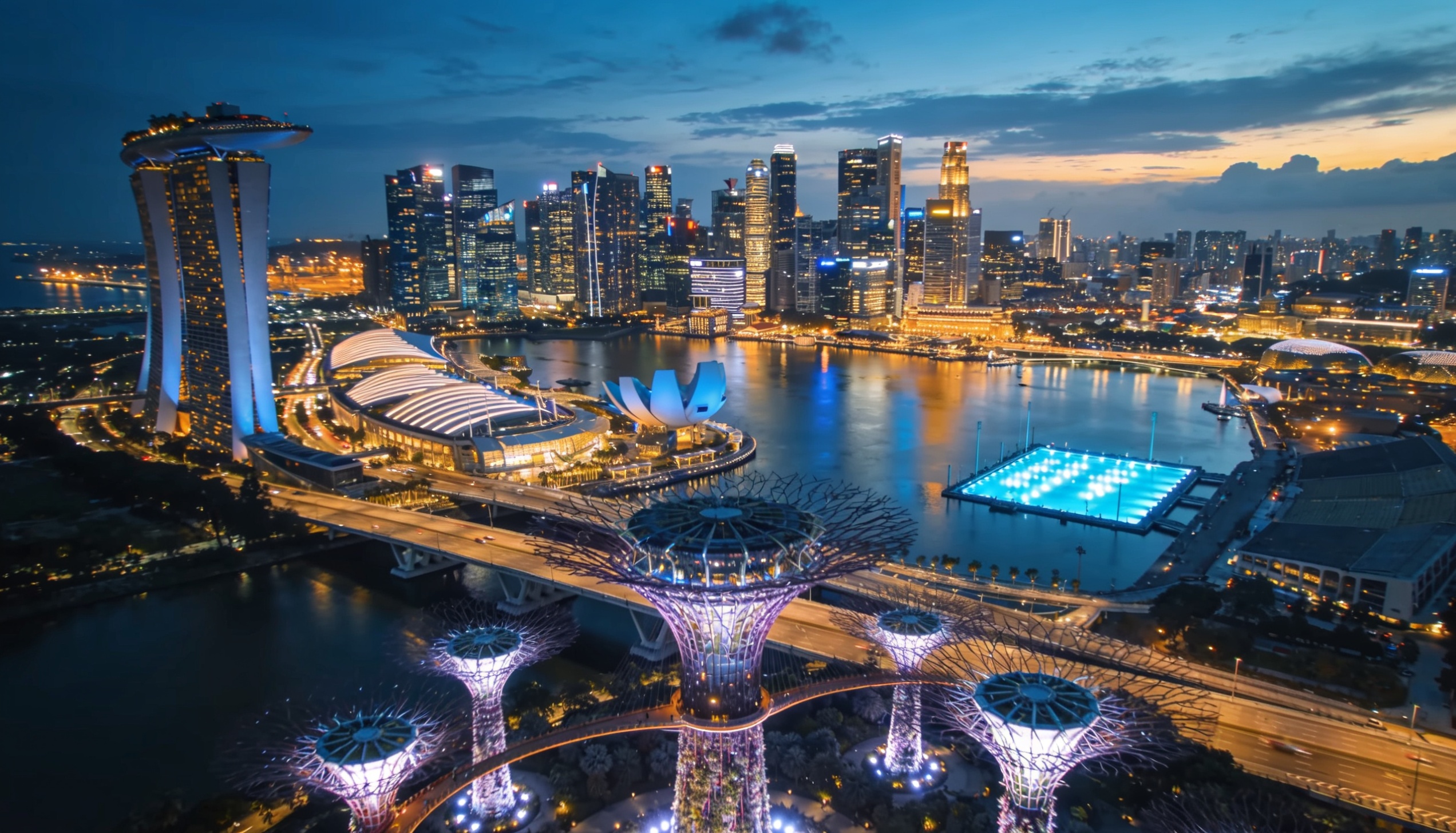
Singapore is a city-state that consistently surprises visitors who expect only gleaming modernity. It has that — Marina Bay Sands, Jewel Changi, the Gardens by the Bay Supertrees — but it also has Chinatown shophouses that have survived a century, Little India markets vibrating with colour and spice, and Hawker Centres where multi-generational stall owners cook food they've been perfecting for decades. The reward for spending longer than a single transit day is a city that reveals itself in layers, not all at once.
Marina Bay — The Singapore Skyline at Its Most Iconic
The Marina Bay waterfront is the face of contemporary Singapore, and it's worth spending an evening there even if only to recalibrate your sense of what city infrastructure can look like. The Supertree Grove at Gardens by the Bay lights up for the free Garden Rhapsody light show at 7:45pm and 8:45pm every evening — 18 vertical gardens up to 50 metres tall, covered in over 162,900 plants, lit with a coordinated sound and light display. It's one of the best free experiences in any city in the world. The OCBC Skyway walkway between the tallest Supertrees is a separate paid ticket and worth doing in the early evening for the bay views.
Marina Bay Sands's observation deck (SkyPark) is the most recognizable vantage point in Singapore — the 57th-floor rooftop with the infinity pool is accessible only to hotel guests, but the observation deck on the same level is open to the public for a fee. The view covers the bay, the Gardens, the financial district, and on clear days reaches across the strait to Indonesia. Go at sunset or just after dark when the city begins to light up.
The ArtScience Museum, housed in the lotus-shaped building at the base of Marina Bay Sands, has both permanent and temporary exhibition programmes. The permanent Future World: Where Art Meets Science exhibition — a collaboration with teamLab — is consistently one of the most visually extraordinary interactive spaces in Southeast Asia and suitable for all ages.
Chinatown and the Old Town Grid
Singapore's Chinatown is compact, walkable, and anchored by the Sri Mariamman Temple (Singapore's oldest Hindu temple, built 1827, with a towering South Indian gopuram) and the Buddha Tooth Relic Temple — a modern temple built in Tang Dynasty architectural style, housing a relic believed to be from the historical Buddha. Both are free to enter and genuinely active places of worship, not museum pieces.
The Chinatown Heritage Centre on Pagoda Street presents the history of Singapore's Chinese immigrant communities through preserved 1950s shophouse interiors — three families' living quarters reconstructed with original furniture, showing the extraordinary density and community of early Singapore working-class life. It's one of the city's best museums and consistently overlooked.
The streets around Ann Siang Hill and Club Street, south of the main Chinatown market, are where the neighbourhood transitions from heritage tourism into something more current — small design studios, independent restaurants, wine bars in the ground floors of restored shophouses. Good for an evening wander and dinner.
Little India and Kampong Glam
Little India is the most sensory neighbourhood in Singapore — Serangoon Road is packed with flower garland sellers, textile shops, gold jewellers, and the smell of jasmine and incense that arrives before you see the temple. The Sri Veeramakaliamman Temple on Serangoon Road is one of the most visually elaborate in Singapore, dedicated to the goddess Kali and covered in brightly coloured deity statues. Tekka Centre at the end of Serangoon Road is a wet market and hawker centre that has been feeding the neighbourhood since 1915.
Kampong Glam, a short walk from Little India, is Singapore's Malay quarter — centred on the Sultan Mosque (the golden-domed 1928 mosque that is the city's largest) and the surrounding Arab Street shophouses. Haji Lane, a narrow alley behind Arab Street, has evolved into one of the city's best independent retail and café strips. Arrive mid-morning on a weekday when the streets are quieter.
Hawker Centres — The Real Reason to Visit
Singapore's Hawker Centres are UNESCO-listed as intangible cultural heritage, and they deserve the recognition. A Hawker Centre is a large, open-air collection of individually operated food stalls — typically dozens of them, each specialising in a single dish — where Singaporeans eat breakfast, lunch, and dinner without ceremony or expense.
Maxwell Food Centre in Chinatown is the most visited (Tian Tian Hainanese Chicken Rice has had a queue since Gordon Ramsay called it the best in the city) — but the food is genuinely excellent across most stalls, and even waiting 20 minutes at the famous chicken rice counter is worth it. Lau Pa Sat, the 1894 cast-iron market building repurposed as a hawker centre near the financial district, is more tourist-oriented but the evening satay stalls in the adjacent street are a Singapore institution. Old Airport Road Food Centre, out of the tourist area, is where locals go and where the choice of dishes is widest.
Dishes worth ordering across any hawker centre: Hainanese chicken rice, laksa (coconut curry noodle soup), char kway teow (flat rice noodles stir-fried with egg, bean sprouts, and soy), rojak (fruit and vegetable salad in fermented shrimp paste dressing), and chilli crab if you want a proper sit-down meal at a seafood restaurant rather than a hawker stall.
Transit travellers: Singapore's Jewel Changi Airport, connected to Terminal 1 by a walkway, contains the world's tallest indoor waterfall (a 40-metre rain vortex), a full shopping complex, and a forest valley — all within the airport building. If you have a layover of three or more hours, you don't need to leave the airport to have a Singapore experience.
When to Visit Singapore
Singapore sits just 1.5 degrees north of the equator, meaning the weather is hot and humid year-round with no meaningful seasons — daily temperatures stay between 25°C and 33°C throughout the year. Rain is frequent but typically brief. The months between February and April tend to be slightly drier and slightly less humid, and the Chinese New Year period (usually late January to early February) brings the city's most vibrant street decorations and celebrations. June and December school holiday periods mean busier attractions and higher hotel rates.
Frequently Asked Questions
How many days do you need in Singapore?
Three days covers the main sights — Marina Bay, Gardens by the Bay, Chinatown, Little India, Kampong Glam, and at least two Hawker Centre meals. Four to five days lets you add Sentosa Island (if that's your preference), the Singapore Zoo or Night Safari, and the Botanic Gardens. Singapore is very compact and extremely well-connected by MRT, so time spent travelling between areas is minimal compared to most cities.
Is Singapore expensive?
Singapore is one of the most expensive cities in Southeast Asia for accommodation and alcohol. Hawker Centre meals, however, are some of the best-value food in the world at any price point — a full hawker meal costs a few dollars. The MRT (metro) is efficient and inexpensive. Many of the best experiences — Gardens by the Bay free areas, Chinatown temples, Little India markets, the waterfront promenade — are free. Budget well for your hotel and drink your beer at Hawker Centres rather than hotel bars.
Do I need a visa for Singapore?
Citizens of most countries, including the US, EU nations, UK, and Australia, can visit Singapore visa-free for 30 to 90 days depending on nationality. Citizens of some countries require an e-visa or visa on arrival. Check directly with Singapore's Immigration and Checkpoints Authority before travel. Singapore introduced a mandatory Singapore Arrival Card (SGAC) for all travellers — it's completed online through the official ICA portal before arrival and is free.
What is Singapore famous for?
Singapore is best known for its skyline and modern architecture (Marina Bay Sands, Jewel Changi, Gardens by the Bay), its position as a global financial and airline hub, Hawker Centre food culture, and extraordinary efficiency as a city. It's also the cleanest major city in Southeast Asia by most measures, with strict laws on littering and public conduct. The food — the genuine variety of Chinese, Malay, Indian, and Peranakan cuisines coexisting in a single city — is its most underrated quality.
Heading to Singapore? Compare eSIM plans before you fly.
Singapore eSIM plans compared side by side — data, validity, real-time pricing. Free, no sign-up. roamprice.com →