Things to Do in Switzerland: The Essential 2026 Travel Guide
Switzerland delivers the landscapes that look too good to be real — and then you arrive and they're exactly that good. Snow-capped peaks reflected in glacial lakes, medieval old towns built before the automobile, and a mountain railway system that reaches into places most of the world can't access any other way. This guide skips the obvious and goes straight to what's worth your time.
Zermatt and the Matterhorn
The Matterhorn is one of the most photographed mountains on earth for good reason — its perfectly symmetrical pyramid shape is genuinely extraordinary, and Zermatt is the village built entirely around it. The village is car-free (you arrive by train from Täsch), which gives it an almost alpine-resort-in-another-era quality — quiet streets, the sound of cowbells, and the mountain looming above everywhere you look.
The Gornergrat Railway climbs to 3,089 metres above sea level, offering a 360-degree panorama of 29 peaks including the Matterhorn. The ride itself is one of Switzerland's great experiences — open-sided carriages, the gradient steepening as you climb, the treeline disappearing beneath you. Go early in the morning for the best light and before the afternoon cloud rolls in over the peaks.
For hikers, the Five Lakes Walk (Fünfseenweg) from Blauherd to Sunnegga traces a route past five glacial lakes, each reflecting a different angle of the Matterhorn. The trail takes 2–3 hours and is one of the most consistently spectacular day hikes in the Alps. No technical equipment required, but sturdy footwear is essential.
Lucerne and the Lake
Lucerne has the rare quality of a city where the postcard version and the actual experience are the same thing. The Chapel Bridge (Kapellbrücke) — a 14th-century wooden covered bridge painted with historical scenes — crosses the Reuss River in the Old Town, and the lake stretches out behind it backed by the pre-Alps. It photographs well because it genuinely looks that way.
The Old Town itself is compact and walkable, with painted facades and frescoes on the buildings facing the Weinmarkt square, the Jesuit Church (the first large Baroque church built north of the Alps), and the medieval city walls still largely intact on the hillside above. Budget two to three hours for the Old Town before you start exploring the lake.
The lake boats are a slow, unhurried pleasure — regular services connect Lucerne to Weggis, Vitznau, and the boat landing at the base of Mount Rigi, the "Queen of the Mountains." Rigi offers a different view than Zermatt: rounder, greener, more pastoral, looking down over both Lake Lucerne and Lake Zug on clear days. The rack railway from Vitznau has been running since 1871, making it the oldest mountain railway in Europe.
Swiss Travel Pass tip: If you're covering multiple destinations, the Swiss Travel Pass gives unlimited travel on trains, buses, boats, and most mountain railways for a fixed number of days. It's expensive compared to individual tickets for a short trip, but pays for itself quickly if you're doing Jungfraujoch, Zermatt, and Rigi in the same week.
Bern: The Capital Nobody Talks About Enough
Bern is Switzerland's federal capital and, outside Switzerland, it's dramatically underrated. The Old Town sits on a sandstone peninsula encircled by the Aare river, and the city's 6 kilometres of arcaded walkways (Lauben) mean you can cross the entire historic centre in the rain without ever getting wet. The old town is a UNESCO World Heritage Site — one of the few in the world that is still a functioning, inhabited urban centre rather than a preserved ruin.
The Zytglogge astronomical clock tower on Kramgasse is the central landmark — the mechanical figures perform each hour before the chimes. Nearby, at Kramgasse 49, is the apartment where Albert Einstein lived from 1902 to 1909, now a small museum where he developed his special theory of relativity. It's one of the most quietly interesting small museums in Europe.
The Bear Park (BärenPark) on the bank of the Aare houses the city's bears — a tradition connected to Bern's founding legend. The park is open-air and free, and the bears are given more space than any previous bear habitat the city has used. From the terrace above, there's also an excellent view back over the Old Town.
Interlaken and the Jungfraujoch
Interlaken sits between two lakes — Thunersee and Brienzersee — and functions primarily as the gateway to the Bernese Oberland highlands above. The town itself is pleasant without being exceptional, but what it gives you access to is extraordinary. The Jungfraujoch, reached by a rack railway that burrows through the Eiger and Mönch, sits at 3,454 metres and is the highest railway station in Europe. On clear days — check the weather forecast carefully before booking — the plateau offers views of the longest glacier in the Alps and mountain panoramas extending to the Black Forest on the horizon.
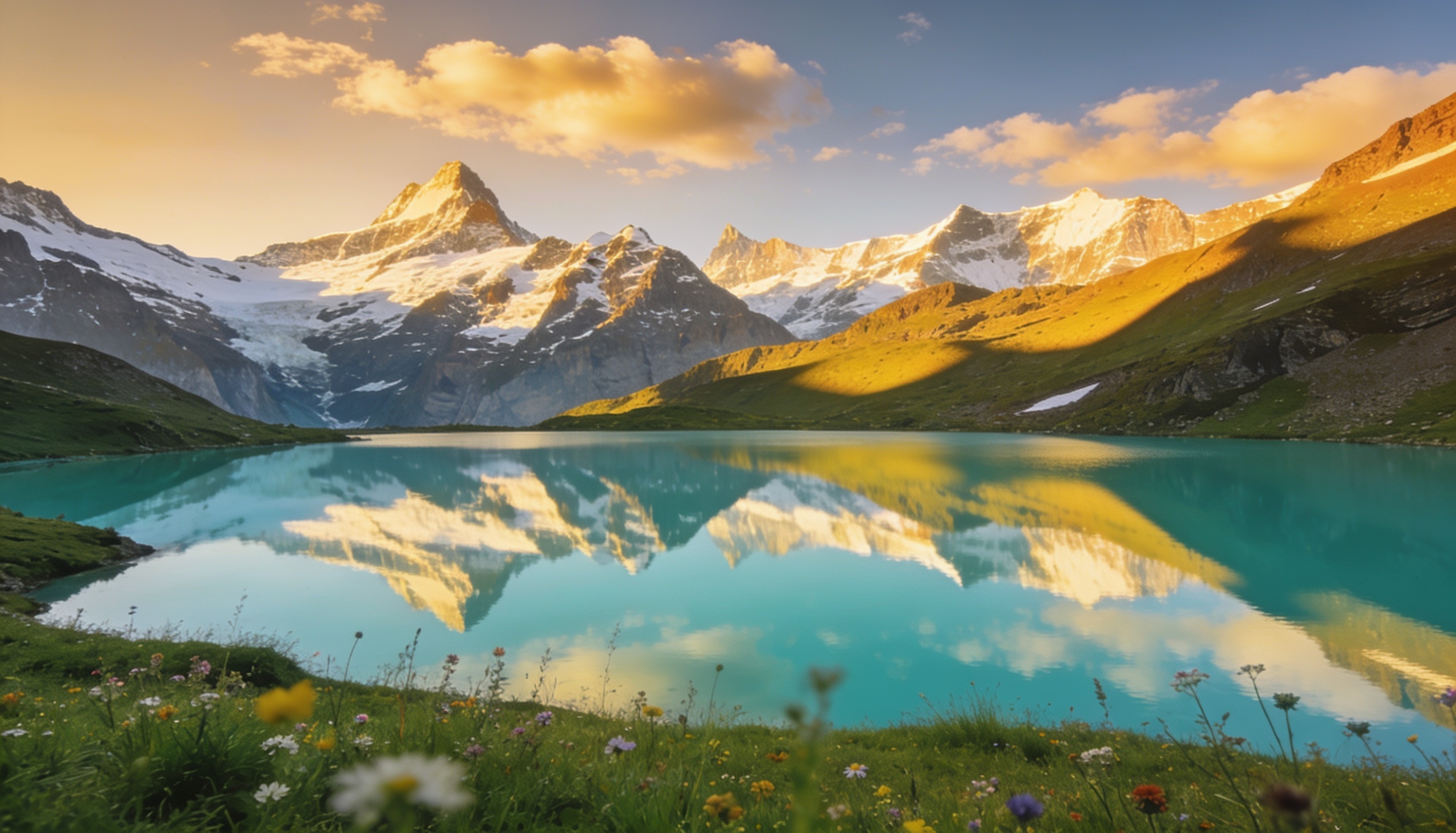
Grindelwald, 45 minutes from Interlaken by train, is the better base for hikers exploring the Eiger's north face region. The First Cliff Walk and Bachalpsee lake trail are both accessible from Grindelwald and offer the kind of scenery — wildflower meadows, glacial lakes, the Wetterhorn and Eiger as backdrop — that feels like an alpine movie set.
Paragliding from Beatenberg, on the ridge above Lake Thun, is one of the more exhilarating experiences in the region — tandem flights with licensed guides, launching from about 1,100 metres and landing in Interlaken's Höhematte park. No experience required.
Geneva and Lake Geneva
Geneva is the most international city in Switzerland — home to the United Nations European headquarters, CERN, the Red Cross, and more international organisations than anywhere outside New York and Brussels. This gives it a cosmopolitan atmosphere that feels distinct from the rest of Switzerland: more formal, more multilingual (French as primary language rather than German), and with the lake providing a genuinely grand waterfront.
The Jet d'Eau — the 140-metre water jet that shoots from the lake in the harbour — is Geneva's most iconic landmark, operating from March to October. The Old Town (Vieille Ville) sits on the hill above, anchored by St Pierre Cathedral, from whose tower there's a view over the lake and, on clear days, towards Mont Blanc. Calvin's Geneva is buried in these streets: the Reformation Wall in Bastions Park is one of the largest monuments to the Protestant Reformation in the world.
For something unexpected, the CERN visitor centre is free and takes about two hours. Home to the Large Hadron Collider — the world's largest and most powerful particle accelerator — the exhibition explains what particle physics is and why it matters, without requiring a physics degree. Advance booking is recommended.
When to Visit Switzerland
Switzerland works year-round but the experience shifts dramatically by season. July and August are peak months for hiking — all major trails are accessible, mountain railways run full schedules, and the wildflowers in the alpine meadows are at their peak. The crowds at major spots like Jungfraujoch and Zermatt are at their highest, and accommodation prices follow. Book months ahead for summer.
June and September offer the same hiking access with smaller crowds and lower prices, and the light in September's early autumn is exceptional. December through March is ski season — Zermatt, Verbier, Davos, and St Moritz are world-class resorts. Spring (April-May) is shoulder season: snow still on the higher peaks, lower trails open, prices down, and the valley towns at their greenest before summer tourism arrives.
Frequently Asked Questions
How many days do you need in Switzerland?
A week gives you time to do Zurich or Geneva as an entry point, one or two alpine destinations (Zermatt or Interlaken), and Lucerne or Bern. Two weeks is ideal for exploring multiple regions without rushing. Switzerland's train network makes multi-city trips very practical — most major destinations are 2–3 hours apart by rail.
Is the Swiss Travel Pass worth it?
For a 7–10 day trip visiting multiple destinations and doing mountain railways (Jungfraujoch, Gornergrat, Rigi), the pass typically pays for itself. For a shorter stay focused on one area, individual tickets may be cheaper. The pass also includes unlimited travel on urban transport and lake boats, which adds value for city time.
What is Switzerland best known for?
The Alps are the headline act — Matterhorn, Eiger, Jungfrau, and the landscape connecting them. Beyond that: Lucerne's medieval Old Town, the quality and precision of Swiss watchmaking (the Watch Museum in La Chaux-de-Fonds, now a UNESCO site), fondue and raclette, and the train network itself, which is one of the world's most reliable and extensive.
What food should I try in Switzerland?
Fondue (melted cheese with bread for dipping, traditionally in Gruyère and Fribourg regions), raclette (melted cheese scraped over potatoes and pickles), rösti (Swiss-style hash brown, particularly in German-speaking Switzerland), and Zürcher Geschnetzeltes (thin veal strips in cream sauce with Rösti, originating in Zurich). For something sweet, Luxemburgerli from Sprüngli in Zurich — lighter than macarons, made fresh daily.
Heading to Switzerland? Compare eSIM plans for the trip.
See all travel eSIM plans for Switzerland — data, validity, and pricing compared free at roamprice.com →