Things to Do in Tbilisi: The Essential 2026 Travel Guide
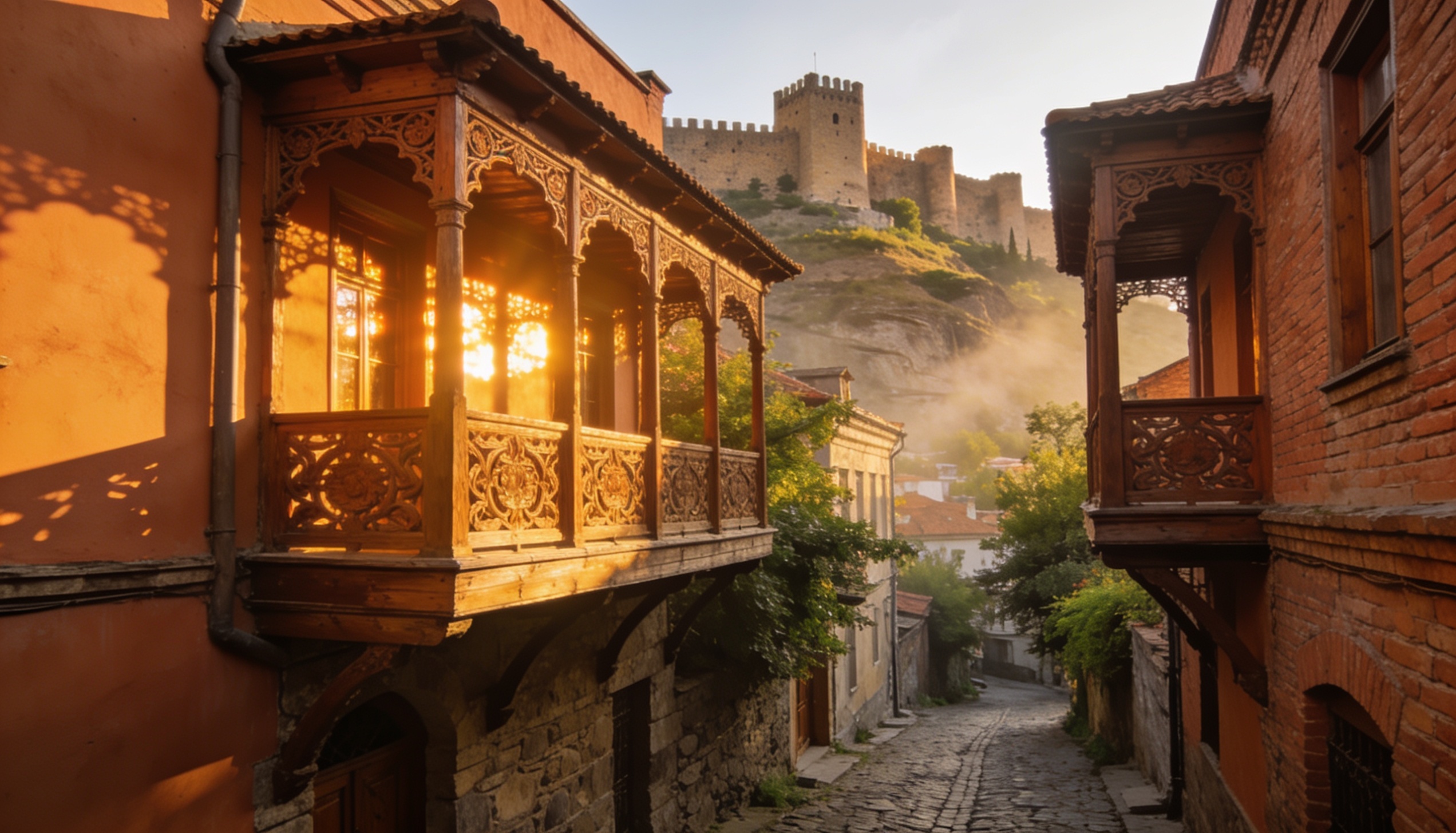
Tbilisi is the kind of place that rewards showing up with no particular plan. The Georgian capital sits in a hollow between forested hillsides and the Kura River, its Old Town a dense knot of carved wooden balconies, sulfur-scented bathhouses, wine-stained tablecloths, and churchyards where cats sleep between the gravestones. It is also, in 2026, the most discussed emerging travel destination in Europe — driven partly by its extraordinary visa policy (citizens of more than 90 countries, including the US, UK, Australia, and all EU member states, can stay for up to 365 days without a visa), partly by the quality and cost of the food and wine, and partly by a culture that treats hospitality as something close to a sacred obligation. What follows is the practical version of what to actually do when you get there.
Old Tbilisi — The Neighbourhood That Built the City
The Old Town occupies the hillside above the Kura River's western bank, roughly between Liberty Square and the Metekhi Church, and it is where Tbilisi started. Legend has it that the city was founded in the 5th century after the Georgian king Vakhtang I discovered sulfurous hot springs while hunting — the city's name, Tbilisi, derives from the Old Georgian word for "warm." The springs still run, and the bathhouses of Abanotubani (the "bath district") still sit above them in their distinctive domed structures.
The best approach to the Old Town is to simply walk it. Shardeni Street is the most restored stretch — cafes and wine bars occupying 19th-century facades — but the more interesting Tbilisi is in the streets perpendicular to it: hidden courtyards (darbazis) where grapevines grow overhead, neighbours hanging laundry across carved wooden balconies, small churches tucked between apartment buildings. Leselidze Street runs parallel and is more local — bakeries selling fresh shoti bread, small pharmacies, corner shops. Getting slightly lost here is not a mistake; it is the point.
The Bridge of Peace, a glass-and-steel pedestrian structure completed in 2010, connects the Old Town on the western bank to Rike Park on the eastern side. The view back toward the Old Town from the eastern end — Narikala fortress on the hillside above, the Metekhi Church on its cliff, the carved balconies and domes below — is one of the best urban panoramas in the region.
Abanotubani — The Sulfur Bath District
The domed bathhouses of Abanotubani, built above the natural sulfur springs that gave the city its name, have been in continuous use for centuries. The experience — soaking in mineral-rich water at around 37°C, followed by a vigorous scrub from an attendant — is unlike anything else in the region and takes around 90 minutes at a comfortable pace. The bathhouses range from communal to private; private rooms are significantly more pleasant and the price difference is modest. Chreli Abano and Gulo's Thermal Spa are the most consistently recommended. The experience functions as a genuine cultural ritual rather than a tourist attraction — Tbilisi residents use the baths regularly — which is worth keeping in mind when you visit.
The area around the baths, between the old caravanserai buildings and the cliff below Narikala, is also home to some of the city's most atmospheric restaurants and wine bars. In the evenings the district fills with the smell of sulfur and barbecued meat, which is a stranger combination than it sounds and more appealing in practice.
Georgian Wine — 8,000 Years of Qvevri
Georgia has a strong claim to being the world's oldest wine-producing nation — archaeologists have found evidence of grape cultivation and fermentation dating back 8,000 years in the South Caucasus. The traditional method involves fermenting wine in qvevri: large clay vessels buried underground, where the juice ferments in contact with grape skins for months before the wine is sealed and left to age. The result — known as amber or orange wine in natural wine circles globally — is nothing like conventional European winemaking, with a deeper colour, tannins from the skin contact, and a complexity that takes some adjustment but is consistently fascinating.
Tbilisi's natural wine scene has become genuinely world-class. Vino Underground in the Old Town is the most famous — a brick-vaulted cellar run by a collective of Georgian small producers, pouring wines you won't find anywhere else. Bina N37, a rooftop space in the Vera district, has qvevri buried in a repurposed swimming pool and a terrace that is one of the better places in the city to sit as the sun goes down. Sulico, also in Vera, is quieter and favoured by Tbilisi's creative community. The Sololaki neighbourhood, immediately below the Old Town, has a concentration of wine bars and small restaurants that rewards an evening of wandering — pick a street, follow the sound of conversation.
Eating in Tbilisi — Khinkali, Khachapuri, and Beyond
Georgian cuisine is one of the most underrated in the world, and Tbilisi is where to encounter it in full form. Two dishes are non-negotiable. Khinkali are oversized soup dumplings — the dough thick and pleated at the top, filled with spiced meat, cheese, potato, or mushroom, with a pool of hot broth inside. The proper technique is to hold the twisted knob at the top (which you don't eat), bite a small hole in the side, sip the broth before it escapes, and then eat the dumpling. Ordering a round of khinkali — six or eight per person is typical — and eating them at a worn wooden table in a basement restaurant is as authentically Tbilisi as an experience gets.
Khachapuri is Georgia's cheese bread, and its regional variations are the subject of intense local debate. The Adjarian version (Adjaruli khachapuri) is the most dramatic: a boat-shaped bread filled with molten sulguni cheese, with a raw egg cracked on top and a knob of butter melting into it. You break off the crust around the edge and stir everything together. It is the dish most visitors remember longest. The Dezerter Bazaar — Tbilisi's main market, near the railway station — is worth an hour on a weekday morning for its rows of churchkhela (walnut-and-grape-juice sweets), dried fruit, pickled vegetables, and every variety of spice used in Georgian cooking.
The Holy Trinity Cathedral, the Clock Tower, and Mtatsminda
The Holy Trinity Cathedral of Tbilisi (Sameba), completed in 2004 after a decade of construction, sits on a hilltop in the Avlabari district across the river from the Old Town and is among the largest Eastern Orthodox cathedrals in the world. Its scale is genuinely surprising from the inside — the interior height is 68 metres — and the surrounding complex of smaller churches, bell towers, and gardens is worth an extended visit. It is not ancient history but it is an important part of how contemporary Georgia defines its national identity.
In the heart of the Old Town, the Rezo Gabriadze Clock Tower is one of those structures that reveals its creator immediately upon inspection. Built by the Georgian playwright, sculptor, and puppet theatre director Rezo Gabriadze between 2006 and 2010, it is a deliberately irregular tower made of brick and various salvaged materials, with a small balcony from which a mechanical angel emerges on the hour. The adjacent Gabriadze Theatre is worth catching if any performances are scheduled during your visit — the puppet shows are extraordinary and have nothing to do with children's entertainment.
Mtatsminda — the flat-topped mountain directly above the city — is reached by funicular from Chonkadze Street and topped by a Soviet-era amusement park with views over Tbilisi that stretch to the Caucasus mountains on clear days. The funicular itself is worth the trip; the park is somewhere between charming and melancholy depending on your disposition, which is part of its appeal. The Mtatsminda Pantheon, halfway up, is the burial site of many of Georgia's most celebrated writers, painters, and public figures.
Why Tbilisi Became the World's Top Digital Nomad City
Tbilisi's emergence as the leading digital nomad destination globally is not accidental. Georgia offers visa-free entry for more than 90 nationalities with a stay of up to 365 days — no application, no approval process, no fee. The tax regime for remote workers and freelancers is among the most attractive in the world. Internet infrastructure, particularly in the city centre and established neighbourhoods, is reliable. Accommodation — from short-stay apartments in the Old Town to modern flats in Vera or Vake — is considerably cheaper than comparable European capitals. And the city itself, with its food culture, wine scene, proximity to mountains, and distinctly unhurried pace, functions as a genuinely pleasant place to be rather than simply a cheap one.
This has made Tbilisi unusual: a city that has been substantially shaped by an influx of long-stay international residents over the past four years, with coworking spaces, specialty coffee, natural wine bars, and English-language service having expanded significantly — without the city losing the character that made it attractive in the first place. The Vera and Vake neighbourhoods, uphill from the Old Town, are where much of this community is concentrated, though the most interesting cafes and wine bars tend to cluster where the nomad community overlaps with the local creative class.
Tbilisi Travel Tips
The best seasons are May–June and September–October, when temperatures are warm but manageable (typically 20–28°C) and the city is not at peak summer crowds. July and August are hot (often above 35°C) but the city stays lively. Winters are mild by Caucasus standards — Tbilisi rarely gets heavy snow — and significantly quieter and cheaper.
Getting around: Tbilisi has a metro with two lines covering the main city areas, supplemented by minibus routes (marshrutkas) and taxis. Bolt works reliably in Tbilisi and is the most convenient option for cross-city trips. Buy a metro card (Metromoney) at any station — it covers both metro and bus. Walking is viable for the Old Town and immediate surroundings; the hills make it less practical for anything further.
Georgian Lari (GEL) is the local currency. Most restaurants and shops accept cards, but smaller vendors and market stalls prefer cash. ATMs are widely available. Tbilisi is genuinely one of the most affordable places to travel in Europe — a full dinner with wine at a mid-range restaurant typically costs well under the equivalent of what a coffee and pastry would in a Western European capital.
Frequently Asked Questions
Do I need a visa to visit Georgia (the country)?
Citizens of more than 90 countries — including the US, UK, Canada, Australia, and all EU member states — can enter Georgia without a visa and stay for up to 365 days. This is one of the most generous visa-free policies in the world. Check the Georgian Ministry of Foreign Affairs website for the current full country list before travel.
Is Tbilisi safe for tourists?
Tbilisi is generally very safe for visitors, including solo travelers. Violent crime against tourists is rare. Standard urban precautions apply in crowded areas — the Old Town market and the Dezerter Bazaar in particular. English is widely spoken among younger Georgians and in the tourist areas of the city centre.
How many days do you need in Tbilisi?
Three to four days covers the Old Town, Abanotubani, Mtatsminda, the main wine bars, and enough meals to get a real sense of Georgian food. Five to seven days is more comfortable and allows for a day trip to Mtskheta (the ancient capital, 20km away), the wine region of Kakheti, or the cave city of Uplistsikhe.
What is the best way to get from Tbilisi airport to the city?
The Express Train runs from Tbilisi International Airport to the central Didube and Station Square metro stations — the journey takes about 35 minutes and runs frequently. Taxis are also readily available outside arrivals; use the Bolt app to avoid negotiating a price. The journey by car takes 20–40 minutes depending on traffic.
What is Georgian wine and why is it special?
Georgia is one of the world's oldest wine-producing regions, with evidence of winemaking dating back 8,000 years. The traditional qvevri method — fermenting wine in clay vessels buried underground with extended skin contact — produces amber and orange wines with flavours and textures unlike conventional European winemaking. Georgian natural wines have become sought-after globally; drinking them in Tbilisi, where the culture that produced them is still intact, is a different experience than drinking them elsewhere.
Heading to Georgia? Compare eSIM plans before you fly.
Find the best travel eSIM plan for Tbilisi and the rest of Georgia — compare providers by data, validity, and price per GB. Free, unbiased, no sign-up required.
Compare Georgia eSIM plans →